
Tungsten rings pros and cons come down to one trade-off: you get the hardest, most hard-wearing ring metal commonly available, but you give up the ability to resize it. For most guys, that swap is worth it. Tungsten carbide rings hold their finish for years, cost a fraction of gold or platinum, and look sharp from day one to decade ten. Searches for "tungsten carbide wedding rings pros and cons" and "will tungsten scratch" both lead to this page because guys want a single honest breakdown before they buy. That is what this 2026 guide does. No vague claims, no luxury-store fluff, just every real upside, every real downside, and a clear answer on who should wear one.
What Is Tungsten Carbide, Exactly?
When you see "tungsten ring," what you're actually buying is tungsten carbide, an alloy of tungsten and carbon atoms bonded together at extreme temperatures. Pure tungsten on its own is too brittle for jewelry. Tungsten carbide is what gives the ring its hardness and its reputation for not picking up scratches like a softer metal would. For a full breakdown of which materials, widths, and styles work best, check out our complete guide to the best wedding bands for men.
On the Mohs hardness scale, tungsten carbide rates between 8.5 and 9. For context: diamonds are 10, sapphires are 9, and alloyed gold sits between 2.75 and 3.5 depending on karat. That means the everyday things that scuff a soft metal (your desk edge, your car door, a barbell knurl) generally do not leave a visible mark on tungsten. If you want a deeper dive on where tungsten lands relative to titanium and steel, see how tungsten stacks up against other "hardest metal" claims.
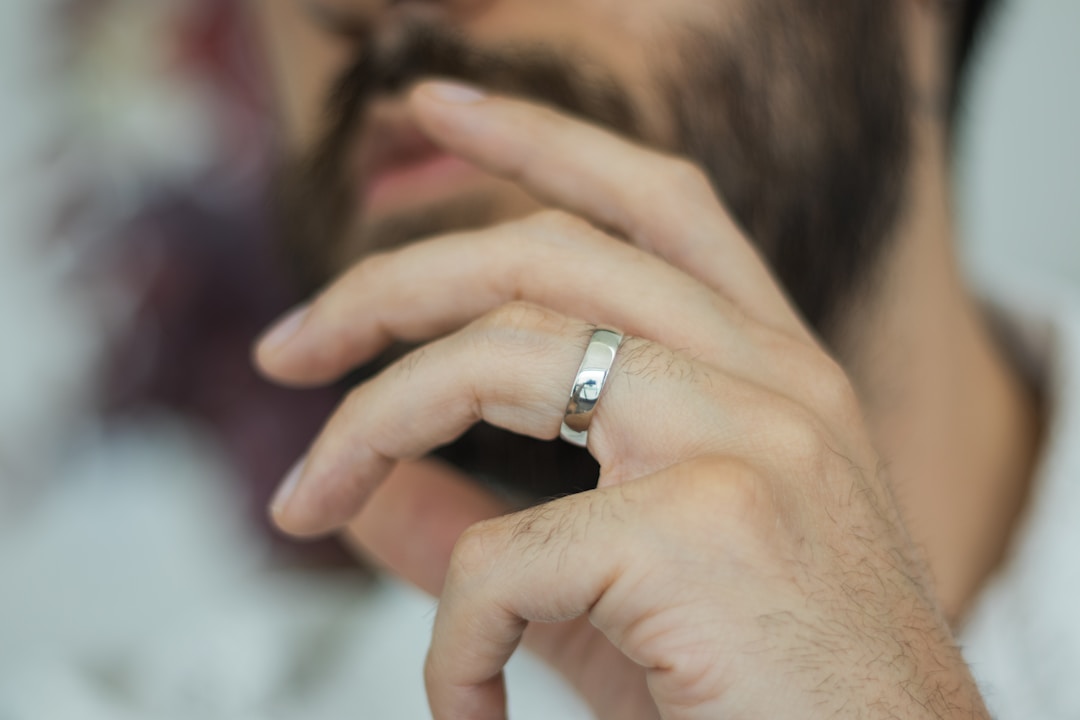
Most quality tungsten carbide rings use nickel as the binding agent. Cheaper versions sometimes use cobalt, which can cause skin irritation and discoloration over time. Every ring at FoundryCut uses a nickel binder, no cobalt, no shortcuts. That single choice is the difference between a tungsten ring that ages gracefully and one that turns a finger green by month six. The binder question is also the center of the wider safety debate, which we work through in our guide to whether tungsten rings are safe.
Will a Tungsten Ring Scratch?
The short version is that almost nothing you encounter day to day will scratch a tungsten carbide ring. Sand and quartz dust, which are the abrasives in most everyday grime, sit around Mohs 7. Tungsten carbide is 8.5 to 9. That gap is why guys who switch from gold notice the difference in the first month. The marks they used to see after a week at the gym or under a car simply do not appear.
Things that can scratch tungsten: diamond tools, ceramic (some ceramics rate 9), and other tungsten carbide objects. If you work with diamond grinding wheels or carbide cutters at work, those will eventually leave a mark. For the rest of us, the realistic answer to "will tungsten scratch" is "not from the things that scratch your gold ring." It is the closest a wedding band gets to a forget-about-it material without going up to industrial ceramic.
One nuance worth knowing: tungsten comes in silver, black, and warmer gold and rose tones, and the tone you pick changes how the ring reads far more than it changes anything else about it. Pick the one you actually want to look at every day. If you want to compare the finishes side by side, see our breakdown of brushed vs polished tungsten finishes.
The Pros of Tungsten Rings
1. Scratch Resistance That Actually Holds Up
This is the headline advantage, and it is not exaggerated. A tungsten carbide ring will look close to the same five years from now as it does today. Gold rings pick up visible scuffing within weeks of daily wear. Titanium holds up better than gold but still shows wear patterns. Tungsten holds its surface in a way the softer metals do not. If you work with your hands, this is the single biggest reason most guys end up here.
2. They Keep Their Polish or Their Matte
Because the surface does not pick up everyday scuffs, a polished tungsten ring stays polished. A brushed matte band stays matte. You will not need to take it to a jeweler for re-polishing every year, which is a maintenance step gold and platinum ring owners deal with regularly. The brushed finish on a ring like Ingot looks the same after a year of daily wear as it did on day one.
3. Serious Weight and Feel
Tungsten carbide is dense, so a tungsten ring has real heft to it. You feel it on your finger, and most guys actually prefer that. It feels substantial in a way that titanium (which is extremely lightweight) does not. If you want a band that feels like it means something, tungsten delivers. For the actual gram-by-gram weight comparison, see how heavy tungsten is next to titanium, gold, and platinum.
4. Price You Can Justify
A quality tungsten carbide ring costs a fraction of an equivalent precious-metal band. A comparable gold wedding ring typically starts where a tungsten band ends and easily climbs several times higher, and platinum is higher still. Every ring at FoundryCut is priced where the market actually makes sense for a tungsten band, and the savings versus gold or platinum are not subtle. The pricing piece is worth a separate look in our tungsten ring price guide if you want context on what a fair price looks like.
5. Hypoallergenic (When Made Right)
Tungsten carbide with a nickel binder is hypoallergenic for the vast majority of people. It will not cause the green-finger effect you can get with cheaper gold alloys. Just make sure you are buying from a brand that does not use cobalt binders. That is where the skin-irritation issues come from. Our deeper write-up on whether tungsten rings are hypoallergenic explains why the binder matters more than the tungsten itself.
6. It Is Chemically Inert and Will Not Tarnish
Tungsten carbide is chemically inert. It does not react with water, sweat, chlorine, or the chemicals in your soap. It does not develop a patina the way silver or even some gold alloys can. If you want a band that looks the same at your 25th anniversary as it did on your wedding day, tungsten is the answer.
7. Safe Around Most Job-Site Hazards
Tungsten carbide is non-magnetic and not a strong electrical conductor compared to bare copper or silver, which is one reason it gets recommended for trades. If you work in electrical or mechanical fields, the answer to "is my ring going to cause a problem" is much more often "no" with tungsten than with a soft precious metal. We cover this question in more detail in our piece on tungsten conductivity and wedding ring safety for electricians.
The Cons of Tungsten Rings
1. You Cannot Resize It
This is the biggest downside, and it is worth understanding before you buy. Tungsten carbide is so hard that jewelers cannot cut, bend, or solder it the way they can with gold. If your finger size changes (due to weight changes, aging, or temperature), you need a new ring, not a resize. Our piece on what to do instead of resizing a tungsten ring covers the practical workarounds.
That said, at tungsten pricing, replacing a ring costs less than the cost of resizing a gold one. And most reputable tungsten ring brands offer exchange programs for exactly this reason. The "non-resizable" objection sounds bigger on paper than it plays out in real life.
2. It Can Crack on Hard Impact
Tungsten carbide is hard, but it is not flexible. If you drop it on a hard tile floor or slam it against a steel surface, it can crack or shatter. Gold and platinum would dent in the same situation. They deform rather than break. For most daily activities, this is not a concern. But if you regularly work around heavy machinery or drop heavy tools, it is something to be aware of.
The flip side is a safety advantage: in a medical emergency, the fact that tungsten cracks under pressure means an ER team can crack a tungsten band off your finger using standard vise-grip pliers in seconds. Gold rings require ring cutters and more time, which can matter when a finger is swelling fast. Full mechanics of the removal process are in our guide to emergency removal.
3. Limited Customization
You cannot engrave tungsten as easily as gold or silver. Laser engraving works well on tungsten, but traditional hand engraving does not. And because of the hardness, you will not find as many detailed designs or stone settings in tungsten as you would in soft precious metals. Most tungsten rings are clean, simple bands. If you want something ornate or heavily set with stones, tungsten is not the material for that.
4. You Cannot Solder or Modify It
Once a tungsten ring is made, that is it. No adding prongs, no soldering attachments, no reworking the band. What you see is what you get. For most guys buying a wedding band, this is a non-issue. But it is worth knowing upfront if you imagined a ring you could modify down the line.
Tungsten vs Other Ring Metals: Side-by-Side
| Feature | Tungsten | Gold (14K) | Titanium | Platinum | Cobalt |
|---|---|---|---|---|---|
| Hardness (Mohs) | 8.5 to 9 | 3.5 | 6 | 4 to 4.5 | 5 to 6 |
| Scratch Resistance | Excellent | Poor | Good | Poor | Good |
| Weight | Heavy | Medium | Very light | Heavy | Medium |
| Resizable? | No | Yes | No | Yes (difficult) | No |
| Tarnish/Corrosion | None | Possible | None | None | Minimal |
| Relative Price | $ | $$$ | $ | $$$$ | $$ |
| Hypoallergenic | Yes (nickel binder) | Varies | Yes | Yes | Usually |
| Emergency Removal | Crack (fast) | Cut (slow) | Cut (slow) | Cut (slow) | Cut (slow) |
The short version: tungsten wins on durability and price. Gold and platinum win on tradition and resizability. Titanium is the lightest option but picks up wear more easily than tungsten. For a guy who wants a band that holds up and does not cost a mortgage payment, tungsten carbide is the strongest choice. If you are specifically cross-shopping titanium, the head-to-head is in our tungsten vs titanium strength breakdown.
Tungsten vs Gold: When Each Wins
The most common cross-shop on the way to a tungsten ring is gold. The honest answer on tungsten vs gold is that they are not really the same product. Gold is a precious metal that doubles as money. Tungsten is a hard industrial alloy made into jewelry. They each win in different lanes.
Gold wins when family history or culture asks for gold specifically, when you may need to resize the band at some point in the future, or when the heirloom value of the metal itself matters to you. A 14K gold band is roughly half gold by weight, and the gold portion has real resale value as a metal, and tungsten has effectively none. If you ever imagine reselling the ring for the material rather than the jewelry, gold is the side of that trade you want.
Tungsten wins everywhere else, starting with day-to-day appearance, because it holds its finish through years of typing, lifting, washing, and bumping. On price, the same dollars buy a much sharper-looking band. On weight, most guys prefer the feel of a denser ring. And on maintenance, you do not have to budget for re-polishing visits. For the full side-by-side, see our tungsten vs gold wedding bands comparison.
Tungsten vs Platinum: A Different Trade-Off
Platinum is where things get interesting, because platinum and tungsten are the two heavyweights of the wedding band world. Both rings sit on your hand with real weight, both are inert, and both feel "premium" in the hand. The trade-off is different from the gold one. Our full guide to tungsten vs platinum wedding bands breaks the two down spec by spec.
Platinum is softer than people assume. On the Mohs scale it sits around 4 to 4.5, in the same soft band as ring gold alloys at roughly 2.75 to 4. Platinum picks up scratches and patina readily, and most platinum owners come to actually like the patina look over time. Tungsten does the opposite, looking the same in year ten as it did in year one. If your taste is "I want a ring that ages with me and develops character," platinum delivers that. If your taste is "I want a ring that just works and looks identical forever," tungsten is the better answer.
On price, platinum and tungsten are not even close. Platinum is one of the most expensive options on the market for a plain band. Tungsten is one of the most affordable. For most guys, the practical decision lands on tungsten unless platinum's softness-into-patina look is specifically what you want.
Is a Tungsten Ring Right for You?
Tungsten Is a Strong Fit If You:
Work with your hands, whether that is construction, mechanics, trades, or gym work. The hardness means your ring shrugs off what would chew up a gold band. You do not want to think about maintenance. No polishing, no tarnish checks, no annual jeweler visits. You prefer a substantial feel. Tungsten has weight to it, and most guys who try one on prefer that over featherlight titanium. You want to look good without overpaying. A band like Monolith (matte black, beveled edge) reads like a much more expensive ring than it actually is.
Tungsten Might Not Be Right If You:
Expect your ring size to change significantly. If you are in the middle of a major weight change, it might be worth waiting until your size stabilizes before buying. You want an ornate, heavily engraved design with set stones. Tungsten's hardness makes detailed work difficult, and the catalog reflects that. You specifically want gold for cultural or family reasons. That is a valid choice. Tungsten just offers a different set of strengths.
What Should You Look For When Buying a Tungsten Ring?
Check the Binder Material
The single most important quality indicator in a tungsten carbide ring is the binder. Nickel binder means the ring will age well. Cobalt binder means you may run into skin reactions and oxidation over time, the same tradeoff covered in more depth in our tungsten vs cobalt comparison. Cobalt-bound tungsten rings are cheaper to manufacture, which is exactly why budget retailers default to them. If a brand does not disclose their binder, treat that as a red flag.
Width Matters More Than You Think
Most tungsten wedding bands come in 6mm or 8mm. The difference is subtle in millimeters but noticeable on your hand. Guys with thinner fingers generally look better in 6mm, and broader hands suit 8mm. For the full breakdown of how to pick between widths, see our guide to 6mm vs 8mm ring width. Monolith is one of the few rings available in both widths, so you can compare without committing.
Comfort Fit Is Non-Negotiable
A comfort-fit ring has a slightly domed interior that reduces pressure on your finger. Since you cannot resize tungsten, getting the fit right is critical. Every FoundryCut ring uses a comfort-fit profile. It is the standard, not an upgrade. Pair that with an at-home sizing pass first. Our no-BS guide to measuring men's ring size at home walks through the process.
Finish and Color
Tungsten rings come in silver, black, and combinations with inlays like rose gold, gold, or blue. Which one suits you is a styling question more than a technical one, so start from what you already wear on your wrist and on your belt and work back from there. If you want the plainest version of the lineup, consider a silver band like Ingot or browse the black tungsten rings collection if you prefer the look of black.
Common Questions About Tungsten Rings Pros and Cons
Are tungsten rings safe to wear every day?
Yes. Tungsten carbide is hypoallergenic (with nickel binder), chemically inert, and extremely hard. It is one of the safest metals for daily wear. The only caution is to avoid repeated hard impacts. Tungsten can crack if dropped on hard surfaces like tile or concrete, though this is uncommon in normal daily use.
Do tungsten rings turn your finger green?
No, as long as the ring uses a nickel binder. Cheap tungsten rings with cobalt binders can cause discoloration and skin irritation. All FoundryCut rings use nickel-bound tungsten carbide, so green fingers are not a concern.
How long do tungsten carbide rings last?
Indefinitely, in terms of the material itself. Tungsten carbide does not degrade, tarnish, or wear down with normal use. The surface stays close to the same after ten years as it did on day one. That applies across the lineup, whether you go with the silver look or one of the darker tones.
Can tungsten rings be removed in an emergency?
Yes, and faster than gold or platinum. Tungsten carbide can be cracked off using standard vise-grip pliers in an emergency room. Gold rings require specialized ring cutters, which takes longer. The "cracking" property of tungsten is actually a safety advantage in medical situations.
Is tungsten better than titanium for a wedding band?
It depends on what you prioritize. Tungsten is harder, heavier, and holds its finish longer. Titanium is lighter and slightly more impact-flexible, and neither can be resized. For guys who want a band that holds its surface and has a solid, weighty feel, tungsten is the stronger choice. Read the full tungsten vs titanium comparison for the side-by-side. For an ultralight ring, titanium wins on weight alone.
Will a tungsten ring scratch?
Almost nothing in daily life will scratch tungsten carbide. Tungsten sits at Mohs 8.5 to 9, while everyday abrasives (sand, dust, dirt) sit around 7. Only diamond tools, some ceramics, and other tungsten carbide objects can leave a mark. For typical office, gym, or job-site wear, the realistic answer is that you will not see scratches the way you would on a gold or platinum band.
Why are tungsten rings so much cheaper than gold or platinum?
Tungsten is industrial in origin and is not priced like a precious metal. Gold and platinum carry both manufacturing cost and underlying metal-market value, and tungsten carbide does not. You pay for the ring, not for the metal as a commodity. That is why a cleanly made tungsten band can look as sharp as a precious-metal one at a fraction of the price.
Tungsten carbide is not trying to be gold. It is a different category of wedding band entirely. It is harder, more affordable, and lower maintenance than any precious metal, and the trade-offs (no resizing, can crack on hard impact) are real but manageable for most guys. If you want a ring that performs as well as it looks and does not need babying, browse the FoundryCut tungsten collection. Every style is nickel-bonded tungsten carbide, built to last, comfort-fit by default.
For a focused look at black-colored options specifically, see our complete guide to black wedding bands for men. For sensitive-skin wearers, the deeper hypoallergenic explainer covers why the binder metal matters more than the tungsten itself.


