
A black zirconium ring is one of the few black bands where the color is not a coating. It is the metal itself, chemically transformed. That single fact is what makes zirconium interesting, and it is also the reason it sits in a completely different price bracket than black tungsten.
If you have been comparing the two, you have probably found a lot of pages that lean hard on whichever metal they happen to sell. This one lays out how each material actually behaves: how the black is made, how it holds up, what each one weighs, what happens in an emergency room, and what you pay for the difference.
In This Guide
- What Is a Black Zirconium Ring?
- How Black Zirconium Gets Its Color
- Black Zirconium vs Tungsten at a Glance
- Weight and How Each One Wears
- What Happens to the Black Over Time
- Price: What You Actually Pay
- Safety and Removal in an Emergency
- Which One Should You Choose?
- Common Questions About Black Zirconium Rings
What Is a Black Zirconium Ring?
Zirconium is a silver-grey transition metal, atomic number 40. In its raw state it looks a lot like titanium: light, matte, unremarkable. Nobody buys a plain zirconium ring for the way it looks.
What makes it a jewelry metal is what happens when you heat it. Fire zirconium in open air at high temperature and the outer skin of the metal reacts with oxygen and converts into zirconium dioxide, a hard black ceramic. The result is a band whose surface is genuinely a different substance from its core, grown out of the metal rather than sprayed onto it.
That is the whole pitch for black zirconium. Not "black metal," but "metal that was turned black."
How Black Zirconium Gets Its Color
The oxide layer forms in a furnace. Temperature and dwell time determine the shade, which is why black zirconium from two different shops can look slightly different: one reads as a deep charcoal, another as a near-true black with a faint blue cast in daylight.
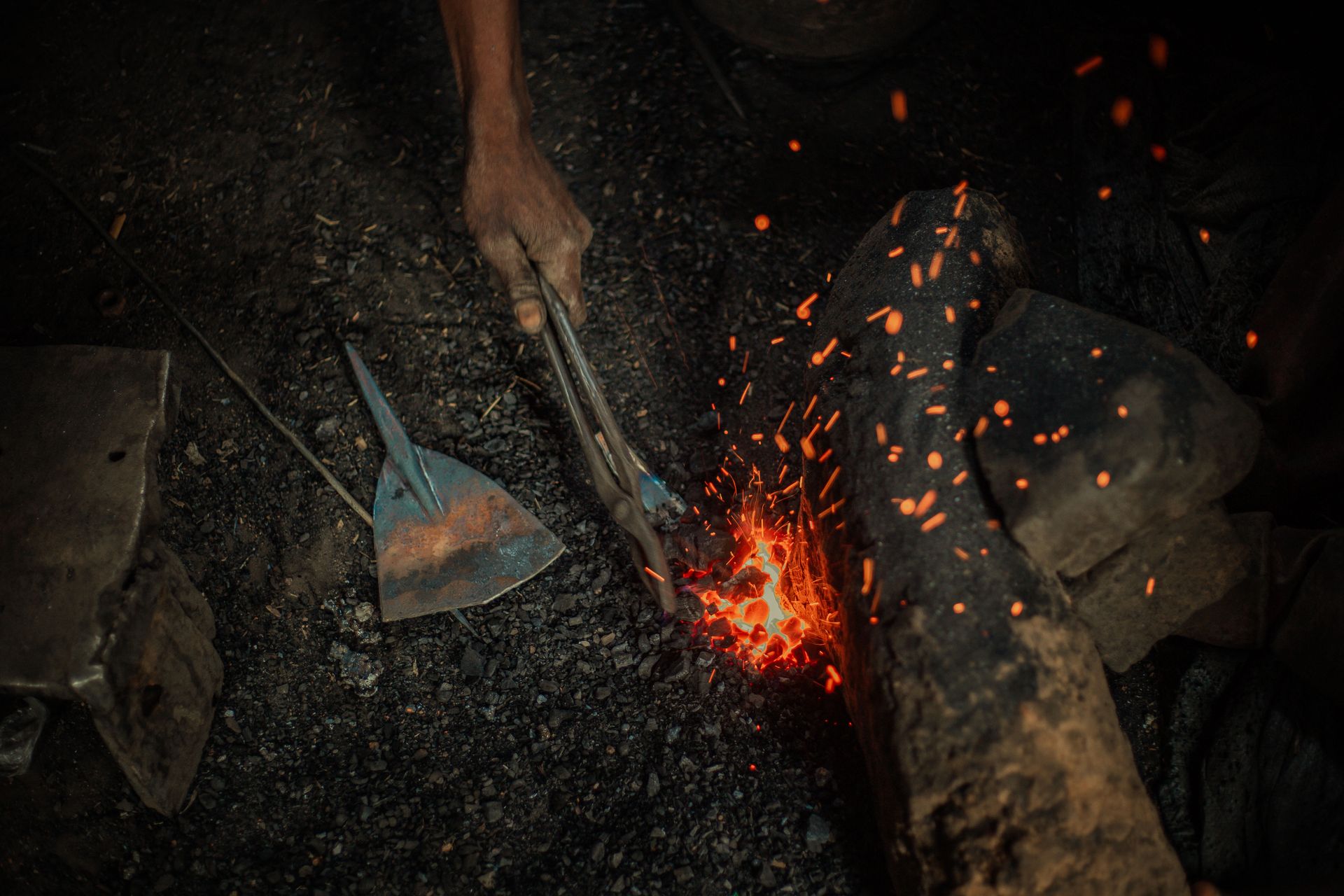
The critical detail, and the one most product pages skip, is depth. The black oxide layer on a zirconium ring is measured in microns. It is a skin, not a slab. It is genuinely part of the ring in a way that a plated finish is not, but it is still a surface, and surfaces can be worn through.
Black tungsten works differently. FoundryCut bands and most black tungsten on the market start as grey tungsten carbide and receive a black finish through physical vapor deposition, an ion-plating process that bonds a thin black layer to the outside. Same basic idea, different chemistry: zirconium grows its black, tungsten has its black applied.
Both are surface treatments over a lighter-colored core. Anyone telling you black zirconium is "solid black all the way through" is selling you something. Cut one in half and the interior is grey.
Black Zirconium vs Tungsten at a Glance
| Aspect | Black Zirconium | Black Tungsten |
|---|---|---|
| How the black is made | Surface oxidized into ceramic by heat | Black layer ion-bonded to the surface |
| Core color underneath | Grey zirconium | Grey tungsten carbide |
| Weight on the hand | Light, close to titanium | Heavy, roughly double |
| Behavior under force | Bends and deforms | Holds shape, then cracks |
| Emergency removal | Standard ring cutter | Cracked off with vice grips |
| Resizable | No | No |
| Typical price | Higher, often several hundred dollars | Lower, the accessible end of the market |
Weight and How Each One Wears
This is the difference you notice in the first ten seconds, and it is the one most buyers underestimate.
Zirconium is a light metal. Its density sits in the same neighborhood as titanium, which means a black zirconium band feels almost weightless once it is on. Some men love that. If you have never worn a ring, or if you work with your hands and want to forget it is there, low mass is a real feature.
Tungsten carbide is roughly twice as dense. A tungsten band has a distinct heft that reads as substantial. It sits into the finger rather than floating on it. That weight is the single most commented-on quality of the metal, and men tend to fall firmly on one side or the other. Our Monolith in black matte is the usual first stop for someone who wants that weight in the simplest possible profile, and it comes in both 6mm and 8mm so you can dial the presence up or down.
Neither weight is objectively better. But you should know which one you are buying before it arrives, because a man expecting heft and receiving a feather is a man who returns a ring.
What Happens to the Black Over Time
Here is where the marketing on both sides gets loose, so let us be plain.
Both finishes are surface layers, and both can show wear. A black zirconium ring that takes a hard drag across concrete can expose grey underneath, and because the oxide layer is thin, the exposed line reads as a bright scratch against the black. A black tungsten ring in the same accident does the same thing, for the same reason.
The honest way to think about it: the black on either ring is a finish, and finishes have a lifespan that depends entirely on what you do with your hands. A man who codes for a living will get a very different result from a man who frames houses. If your work is genuinely rough, the smarter move on any black band is a matte finish rather than a high polish, because matte hides the small stuff instead of advertising it.
Tungsten's advantage is what sits under the finish. Tungsten carbide is the hardest metal in common use for rings, which means the substrate itself is far less prone to picking up the dents and dings that a softer core collects. Zirconium's core is a comparatively soft metal. If the oxide skin is compromised, what is exposed is ordinary grey metal that marks easily.
If black finishes in general are what you are weighing, our complete guide to black wedding bands for men goes deeper on finish choice, and what a black wedding ring actually signals covers the symbolism side.
Price: What You Actually Pay
Black zirconium is a specialty metal with a specialty supply chain. It is machined by a smaller number of shops, the oxidation step adds a furnace cycle to the process, and the volumes are low. Prices reflect that. Most black zirconium wedding bands land in the several-hundred-dollar range, and designer versions with inlays or milled patterns climb from there.
Tungsten sits at the accessible end. The material is abundant, the manufacturing is mature, and the finished bands are priced accordingly. Every ring in the FoundryCut catalog is nickel-bonded tungsten carbide, and the whole lineup lives between $150 and $190.
That gap is the real decision point for most men. You are not choosing between a good ring and a bad ring. You are deciding whether the specific properties of zirconium, the lightness and the grown-in black, are worth two to four times the money.
If the answer is no, and for most buyers it is, the black tungsten side of the market gives you options that a zirconium budget cannot touch. Helm pairs black matte with a rose gold interior. Vesper runs a rose gold inlay across the face. Orbit sets a cosmic stone inlay into black. You can see the full range in our men's black tungsten rings collection.
Safety and Removal in an Emergency
This is the one category where black zirconium has a clear, defensible advantage, and it deserves a straight answer.
Zirconium is a ductile metal. If an emergency room needs to get it off a swelling finger, a standard ring cutter goes through it the same way it goes through a gold band. Every ER in the country has that tool and every nurse knows how to use it.
Tungsten carbide cannot be cut that way. It is too hard for a ring cutter's wheel. Instead it is removed by cracking: the ring is gripped with locking pliers or a purpose-built cracking tool and compressed until it fractures cleanly, which takes seconds. This is a well-established procedure and it works, but it is not what a ring cutter does, and it surprises people who have not heard of it. We wrote a full walkthrough on how a tungsten ring comes off in an emergency, and it is worth reading before you decide.
The related question of whether tungsten fractures too easily in normal life is a separate one, and we answered it honestly in do tungsten rings shatter. The short version: the same brittleness that lets an ER crack it off is the reason it holds its shape under loads that would bend a softer band into an oval.
If you have a metal sensitivity to weigh alongside all this, our piece on whether tungsten rings are hypoallergenic covers the binder question, which is the part that actually matters.
Which One Should You Choose?
Buy black zirconium if you want the lightest possible black band, you specifically value that the black was grown from the metal rather than applied to it, you want a ring an ER can cut rather than crack, and the price premium does not bother you.
Buy black tungsten if you want weight on your hand, you want the hardest substrate available under the finish, you want inlays and two-tone options at a price a specialty metal cannot match, and you are comfortable with the crack-off removal method.
What should not decide it is a claim that one of them is permanently black. Neither is. Both are surface finishes over a grey core, and both will tell the story of how you actually live. Choose the one whose trade-offs you can live with, then pick a finish that suits your hands.
If you are cross-shopping other modern materials while you are at it, our carbon fiber versus tungsten comparison and tungsten versus titanium breakdown use the same framework.
Common Questions About Black Zirconium Rings
Is a black zirconium ring the same as a zirconia or cubic zirconia ring?
No, and the names cause constant confusion. Zirconium is a metal, and a black zirconium ring is a band made of that metal with an oxidized black surface. Cubic zirconia is a clear crystalline stone used as a diamond substitute. They share a root word and nothing else.
Can a black zirconium ring be resized?
No. Like tungsten, zirconium cannot be cut and soldered back together the way gold or platinum can. If your size changes, you replace the ring. This is why getting sized properly the first time matters more with these metals than with a precious-metal band.
Will a black zirconium ring lose its color?
The black oxide layer is thin, so heavy abrasion can wear through to the grey metal underneath. How fast that happens depends entirely on what you do with your hands. It is a surface, and surfaces show use.
Why is black zirconium more expensive than black tungsten?
Lower production volumes, a smaller number of shops that machine it, and an extra high-temperature oxidation step in manufacturing. It is a specialty material, and specialty materials carry a specialty premium.
Which is better for someone who works with their hands?
It depends on the hazard. Tungsten gives you a harder substrate and more weight. Zirconium gives you a band an emergency room can cut off with a standard tool. If your worry is a crush or degloving injury, neither metal solves that, and many trades wear a silicone band on the job and a metal band off it.
Does black zirconium contain nickel?
Zirconium itself is nickel-free, which is part of its appeal for people with sensitivities. Tungsten carbide rings use a binder, and the binder is what matters: nickel-bonded is the standard for jewelry-grade tungsten, and it is what FoundryCut uses.
The Bottom Line
Black zirconium is a genuinely interesting material with one real advantage over tungsten, which is emergency removal, and one real trade-off, which is a softer core under a thin black skin. Tungsten gives you weight, hardness, and a price that leaves room for the rest of the wedding.
Neither is a compromise. They are just different rings for different hands. If the tungsten side is where you are landing, start with our men's black wedding bands and work from profile and finish rather than from a spec sheet.


