
A stone inlay wedding band trades the usual single-tone metal surface for a thin channel of crushed turquoise, malachite, opal, or jasper running through the ring. The result is a wedding ring that carries personal meaning in the same way a tattoo does. The color works as a marker rather than as decoration. For men who find polished gold or plain silver underwhelming, a stone inlay ring gives the band a story without going loud. This guide walks through what stone inlays actually are, which stones hold up to daily wear, how to pair an inlay color with skin tone and lifestyle, and which FoundryCut bands carry stone inlays today.
What is a stone inlay wedding band?
A stone inlay wedding band is a tungsten carbide ring with a narrow channel milled into its outer surface, filled with crushed natural stone bonded into a smooth, flush finish. The channel is usually 1 to 3 millimeters wide and sits centered on the ring, though some designs run two parallel channels or wrap the inlay around the entire circumference. The stone material is ground into a fine grit and mixed with a clear binder, then pressed into the channel and polished flat with the surrounding metal.
The reason inlay sits inside the metal rather than on top is structural. Tungsten carbide is the hardest material commonly used for wedding bands, and it shields the softer stone from edge impacts. A stone set on the surface, like a gemstone in a prong, would crack the first time you closed a car door on it. If a set gemstone is what you actually want, the men's sapphire wedding band guide walks through which of the four settings hold up to daily wear. A stone inside the metal is protected on three sides by a wall harder than almost anything you can hit with a hand.
This is the same construction principle behind antler, wood, and meteorite inlay rings. The soft, expressive material gets the visual stage while the hard outer metal does the structural work. The trade-off is that the inlay surface is the weak point of the ring, so the choice of stone matters more than most buyers realize.
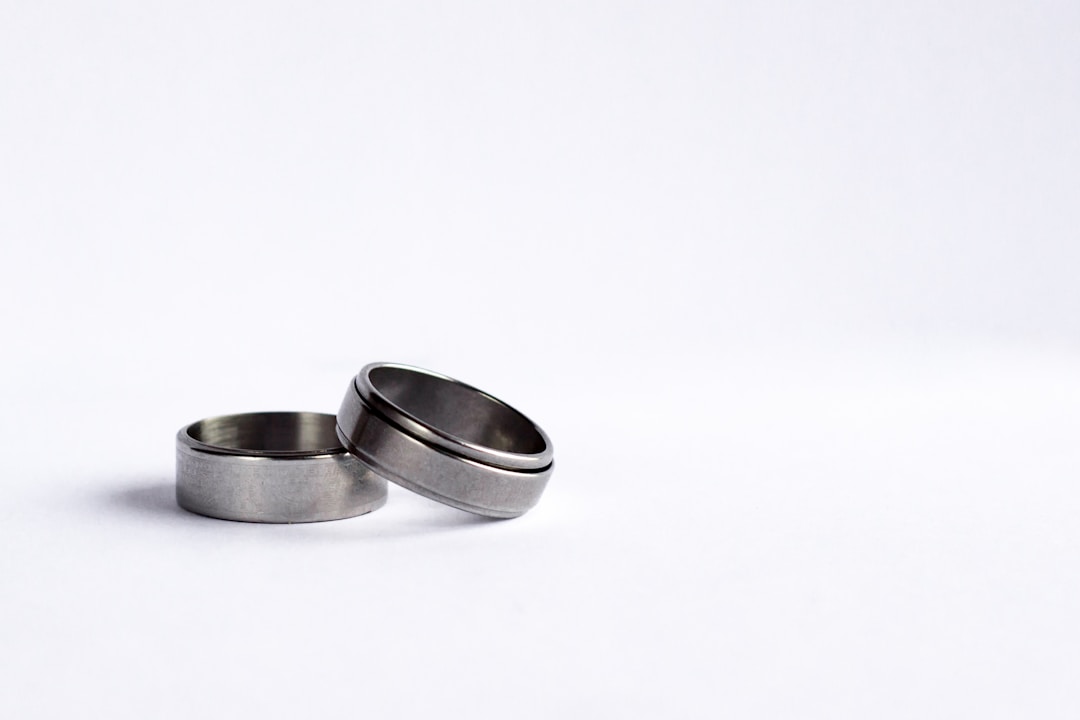
The stones used in inlay rings, ranked by daily wear
Not every stone behaves the same way once it's pressed flat into a tungsten channel. Some hold their color through years of soap, sun, and sweat. Others fade, crack, or pit. Here is the practical wearability ranking for the stones you'll actually see in men's inlay rings.
| Stone | Mohs | Color | Daily-wear grade | Best suited for |
|---|---|---|---|---|
| Jasper | 6.5 to 7 | Red, brown, earth | A (toughest) | Hands-on jobs, outdoor lifestyles |
| Lapis lazuli | 5 to 5.5 | Deep blue with gold flecks | B (good) | Office and dress wear, evening style |
| Malachite | 3.5 to 4 | Banded green | C (softer, avoid abrasion) | Indoor work, low-impact lifestyles |
| Turquoise | 5 to 6 | Sky to teal blue | B (good if stabilized) | Most men, southwestern style affinity |
| Opal | 5.5 to 6.5 | Iridescent multi-color | C (needs hydration) | Statement bands, dress occasions |
| Tiger's eye | 7 | Golden brown with sheen | A (toughest) | Active men, all-around wear |
| Onyx | 7 | Solid black | A (toughest) | Minimalists, monochrome style |
The Mohs scale is the practical guide here. Anything above 6 will resist most surface scratches you'd pick up from keys, sand, or counter edges. Below 5, the stone is going to show wear within a year of daily use. That doesn't make softer stones a bad pick. Opal and malachite both look striking in person and pair beautifully with tungsten, but they're closer to a dress-band material than an everyday job-site ring.
How do you pick a stone color that fits you?
Color choice on an inlay ring is more personal than it is technical. A few things to weigh while you decide:
Cool blues and greens (turquoise, lapis, malachite) read modern and pair well with a silver or black metal base. They look intentional rather than ornamental, which is what most men want from a wedding ring. A turquoise inlay on a brushed black tungsten band like Rift reads quiet from across a room and only reveals its color when the light catches it.
Earth tones (jasper, tiger's eye, onyx) blend almost invisibly with leather, denim, and skin tone. They're the easiest "stone band" to wear without looking like you tried. The texture of a banded jasper inlay also reads more rugged than ornamental, which works well on wide profiles.
Multi-color and iridescent stones (opal, certain agates) carry the most visual weight. They're statement bands, not background bands. If your style leans toward simple watches, single colors, and clean lines, an opal inlay will fight against that. If your style is already expressive, it slots in naturally.
One more honest note: skin tone matters less than people think. A turquoise inlay looks good on every skin tone because the stone itself is the focal point. Your hand is the frame, not the canvas. Worry about the metal color matching the rest of your jewelry (watch, chain, glasses), not the inlay color.
How is the inlay set, and why does it matter?
The strength of a stone inlay ring is almost entirely about how the inlay is set into the channel. There are two main construction approaches, and they age very differently.
The first method uses crushed natural stone in a fine grit, mixed with a clear bonding resin, then pressed into the channel under pressure and cured. Once cured, the surface is ground flat and polished flush with the metal. This is the standard for almost every men's tungsten inlay ring on the market today. The bond is permanent, the surface is smooth to the touch, and the stone is visually authentic because it actually is crushed stone, not paint, not enamel, not a printed image.
The second method uses a solid slab of stone cut to fit the channel and glued in place. This is more common in artisan rings sold at higher price points. The visual is purer because the stone has its full uncrushed pattern, but the bond is weaker and the slab is more vulnerable to cracking on impact than the crushed-and-bonded approach.

FoundryCut uses the crushed-and-bonded method on every inlay band in the catalog. It's the more durable of the two for daily wear, and it lets the inlay sit completely flush with the metal so there's no edge to catch on fabric or hair. The bonded surface is also what allows the inlay to be sealed against water and skin oil, which is the most common failure mode for slab-set inlay rings.
What can a stone inlay ring take day to day?
A stone inlay tungsten ring is not as bulletproof as a plain tungsten band, but it's nowhere near as fragile as a stone-set engagement ring. Most owners treat it the same as their watch. They take it off for activities where it would obviously take a beating, and they wipe it clean once a week.
What it can take comfortably: showering, washing hands, swimming in chlorinated pools (briefly), gym workouts, typing, driving, holding tools, gardening. The inlay is bonded and sealed, so soap and water don't reach the stone in any meaningful way.
What it cannot take: a direct hammer blow on the inlay channel, prolonged saltwater immersion (more than an hour or two), ultrasonic jewelry cleaners (the vibration can loosen the bond over years), and chemical exposure to bleach, ammonia, or strong solvents. None of these are reasons to avoid the ring. They're the same things you'd avoid with any nice watch.
The cleaning protocol is the same as for any tungsten band. Warm water, a drop of dish soap, and a soft microfiber cloth, with no brushes, jewelry polish, or silver dip on the inlay surface. If you want a deeper breakdown of how to keep tungsten looking right, the tungsten ring care guide covers the full routine including the do-not-do list.
FoundryCut's stone inlay options: Relic and Rift
FoundryCut carries two tungsten bands built around stone inlay construction, plus the cosmic-stone family for men who want the inlay aesthetic without traditional earth-tone material.
Relic is the silver matte band with a domed profile and multi-color inlay options. The dome adds a slight visual weight, so the inlay channel sits at the crown of the ring where light catches it cleanly. Relic is the band most men pick when they want the inlay to be the lead feature. The silver metal recedes and lets the color carry the band.
Rift takes the opposite approach: flat profile, black or silver matte metal, with a stone or wood inlay running through a flat channel. Because the metal is flat and the inlay is flat, the ring reads as a single intentional surface rather than as "metal with a stone in it." Rift is the more architectural choice. It pairs especially well with neutral wardrobes and reads more masculine on hands with stronger knuckles.
If you're cross-shopping inlay materials, the cosmic-stone family (Orbit and Nova) gives you the inlay channel construction with a galaxy-style decorative inlay instead of a natural earth stone. That family is covered in the cosmic and galaxy inlay guide if that's the direction you're considering.
Browse the full inlay and natural rings collection to see every current option side by side, including the wood and antler inlay families that share the same channel construction.
Stone inlay vs antler, wood, and cosmic inlays
If you've decided you want an inlay band but you're still picking between materials, here's how stone compares to the other three families FoundryCut offers.
| Inlay type | Visual | Daily wear | Meaning carried | FoundryCut band |
|---|---|---|---|---|
| Stone | Solid color, sealed | Strong (hard stones) | Earth, color symbolism | Relic, Rift |
| Antler | Organic pattern, warm | Good (sealed antler) | Heritage, outdoor | Hearth, Meld, Relic |
| Wood | Grain, warm | Good (sealed wood) | Craft, growth | Rift |
| Cosmic | Iridescent, sparkle | Very strong | Cosmic, statement | Orbit, Nova |
The shortest way to decide: stone inlay reads quietest in everyday wear, antler reads warmest, wood reads most natural, and cosmic reads most decorative. None of them are wrong. The right one is the one that, when you glance at it on your hand a year from now, you still feel was the choice you wanted to make.
How to buy a stone inlay ring without regretting it
A few things worth thinking through before you hit checkout.
Pick the width before the inlay color. A 6mm band gives the inlay enough channel to read clearly without overwhelming a smaller hand. An 8mm band lets a wider inlay anchor the ring visually. The 6mm vs 8mm ring width guide covers how to choose based on hand size, finger thickness, and lifestyle. Pick the width that fits your hand first, then pick the inlay that fits your style.
Get the size right before the inlay choice locks in. A stone inlay tungsten ring cannot be resized. The channel construction means any resize attempt would crack the inlay along the cut line. If you've never been formally sized, the how to measure men's ring size at home guide walks through the only method that works without a jeweler.
Order it in time to live with it before the wedding. Two to three weeks before the date is the comfortable buffer. That gives you time to wear it for a few days, confirm the size feels right under different conditions (heat swells fingers, cold shrinks them), and exchange if it doesn't sit right.
Consider the metal color first, the inlay color second. The metal is what you see 90% of the time on your hand. A black matte band with a turquoise inlay reads black-and-blue. A silver matte band with the same turquoise reads more colorful overall because the metal doesn't carry weight. Decide what register you want the ring to live in, then layer the inlay on top of that.
If you're still working through whether tungsten itself is the right choice before you get to the inlay decision, the best wedding band for men guide walks through the full metal-versus-metal comparison.
Frequently asked questions
Are stone inlays in tungsten rings real stone or fake?
Real, in nearly every case. The standard construction uses crushed natural stone in a fine grit, mixed with a clear bonding resin, then pressed and cured into the channel. The color you see is the actual mineral, not a paint or dye. The only way to verify on a specific ring is to check the listing language for the words "natural" or "genuine" stone material.
Will the stone inlay come loose over time?
If the ring is made with the crushed-and-bonded method and sealed flush, the inlay is structurally part of the band and won't separate from the channel under normal wear. Failure usually only happens after years of ultrasonic cleaning, exposure to harsh solvents, or a direct sharp impact on the inlay surface. With basic care, the bond outlasts the wearer's daily wear patterns.
Can a stone inlay ring be resized?
No. Tungsten carbide cannot be resized because of its hardness, and the inlay channel makes any attempted cut and re-weld impossible without breaking the inlay. The fix for a sizing problem is exchange, not resize. FoundryCut offers a sizing exchange so you can swap to the right size if your first guess was off.
Does the inlay color fade in sunlight or with washing?
Hard stones (jasper, onyx, tiger's eye) are essentially colorfast and won't change in normal use. Softer stones (malachite, opal) can lose surface luster over years of UV exposure, though the color itself stays. The bonded surface protects the stone from chemical change in soap and shower water. The inlay is sealed enough that nothing washes out.
Is a stone inlay ring appropriate for a wedding band or is it too unusual?
It's appropriate for any wedding. Inlay bands have been a standard option in men's wedding jewelry for two decades, and they carry the same symbolic weight as a plain band. The choice between plain and inlay is a style decision, not an etiquette decision. If you'd wear a textured or two-tone band without hesitation, an inlay band sits in the same register.
How do I clean a stone inlay tungsten ring?
Warm water, a drop of mild dish soap, and a soft microfiber cloth, then rinse and pat dry. Avoid stiff brushes, jewelry polish, silver dip, and ultrasonic cleaners. The bonded inlay surface does not need any special treatment beyond keeping the ring clean of skin oil buildup, which is what dulls every wedding ring over time regardless of material.
If a stone inlay band sounds like the direction you want to go, the cleanest next step is to look at Relic and Rift side by side and see which profile reads right for your hand. Both are nickel-bonded tungsten carbide built around the same channel construction described above. Both ship with the same sizing-exchange policy so you can dial in the fit. Browse the full inlay and natural rings collection when you're ready.


