
A 14k gold men's wedding band is 58.3% gold. The rest is copper, silver, zinc or nickel, and that other 41.7% is doing most of the work holding the ring's shape. Jewelers rarely lead with that number, which is a shame, because once you understand what karat actually measures, the price differences between one gold band and the next stop looking arbitrary.
FoundryCut doesn't sell solid gold, so there's no reason for us to talk you into it. Toward the end we cover where a gold-tone tungsten ring makes sense instead, and where it doesn't.
What does 14k actually mean?
Karat measures purity out of 24 parts. So 24k is 99.9% gold, 18k is 18 parts gold to 6 parts other metal (75%), 14k is 14 parts to 10 (58.3%), and 10k is 41.7%. There is no longer a minimum karat in the US for something sold as gold, because the Federal Trade Commission dropped that threshold when it revised the Jewelry Guides in 2018. Lower karats can carry the name as long as the fineness is disclosed right alongside it. What still binds is the stamp itself, and under the National Stamping Act a ring marked 14K has to assay within three parts per thousand of 14 karat, which works out at about 13.9 karat, and within seven parts per thousand if the ring contains solder.
You'll see this stamped inside the band as a number rather than a karat mark on a lot of imported rings. The three-digit hallmarks are parts per thousand: 999 for 24k, 750 for 18k, 585 for 14k, 417 for 10k. A ring stamped 585 and a ring stamped 14K are the same thing.
Pure gold is too soft to survive as a ring. It dents under a fingernail and a band made of it goes oval within months of normal wear. Alloying it with copper and silver is what makes a wearable ring, and the trade is direct: more alloy buys you hardness and costs you gold content, which is why 14k is the default for men's bands in the US and 18k is the default across most of Europe.
14k vs 18k vs 10k on a men's band
For a wedding band you'll wear every day, the choice comes down to how much gold you own, how the color reads, and how well the surface holds up.
| Karat | Gold content | Hallmark | Mohs hardness | Color and cost |
|---|---|---|---|---|
| 10k | 41.7% | 417 | ~4 | Palest yellow, cheapest |
| 14k | 58.3% | 585 | ~3.5 | Warm yellow, US default |
| 18k | 75% | 750 | ~2.75 | Deep yellow, softer, pricier |
| 24k | 99.9% | 999 | ~2.5 | Orange-yellow, not used for bands |
Hardness runs backwards to purity. The more gold in the ring, the softer the ring. An 18k band carries more metal value and a richer color, and it marks up faster in daily wear than 14k does, which is why a lot of men who work with their hands land on 14k even when the budget stretches further.
10k gets less love than it deserves on hardness, but the color is noticeably washed out next to 14k, and the resale value is thin. If you want a yellow band that actually reads as gold across a room, 14k is where that starts.
Yellow, white and rose all start as the same gold
The color of a gold band comes from what's alloyed into it. A 14k yellow band and a 14k rose band contain the identical 58.3% gold. What changes is the other 41.7%.
Yellow gold uses a roughly even mix of copper and silver, sometimes with a little zinc. Rose gold pushes the copper share up, which is what produces the warmer, pinker tone, and copper is harder than silver, so rose gold usually ends up marginally tougher than yellow at the same karat. Our guide to rose gold bands for men goes further into how that tone reads on different skin.
Gold is yellow, so making it white means alloying it with a bleaching metal, usually nickel or palladium, then plating the finished ring with rhodium to get the bright silvery finish you see in the case. That rhodium layer is thin and it wears off. A redip every one to three years is typical, depending on how hard you are on the ring, and the yellowish alloy underneath starts showing at the edges first.
Nickel-alloyed white gold releases small amounts of nickel over time, which matters to anyone who has reacted to jewelry before. Palladium white gold avoids that at a higher price. If you have a known metal sensitivity, patch testing with a dermatologist tells you far more than any label on a product page. We cover the color and plating question in more detail in the white gold buyer's guide.
What are you actually paying for?
A solid gold ring is priced from the metal up. Gold trades by weight, the karat sets what fraction of that weight is gold, and the ring's dimensions set how many grams there are. Everything after that is fabrication, finishing and retail margin.
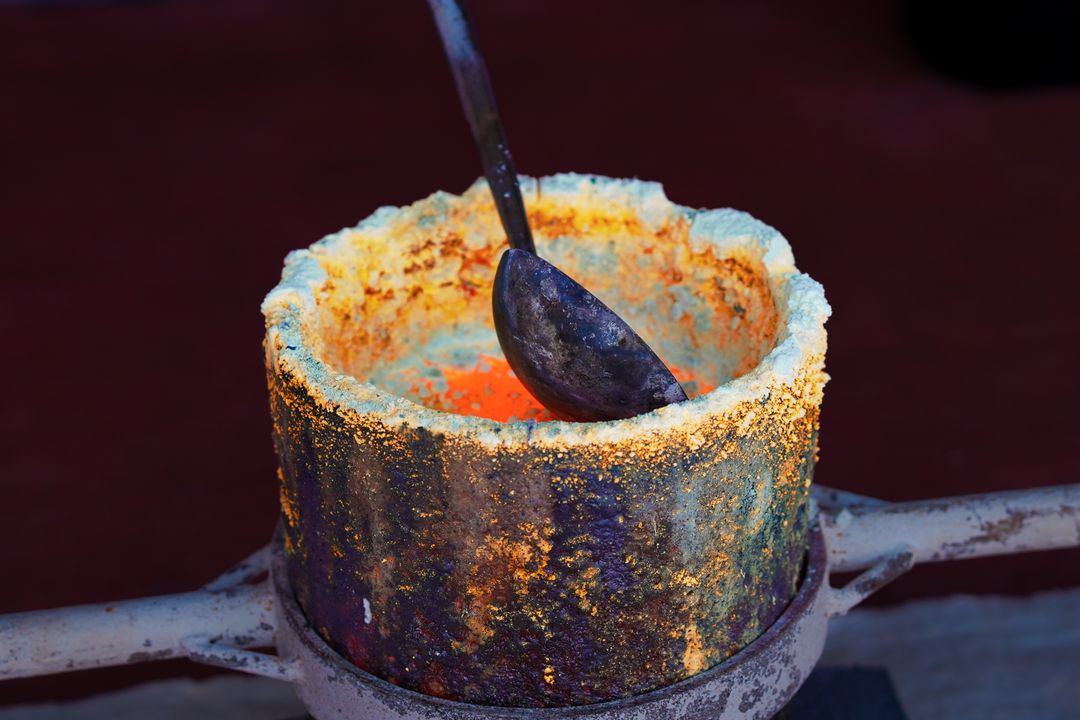
Go from a 6mm band to an 8mm band and you're adding a third more surface. Add depth for a comfort-fit interior and the volume climbs again. Two 14k rings from the same maker in the same color can differ by a hundred dollars or more purely on how much metal is in them, before anyone has done a minute of work on either.
In practice, a plain 14k yellow men's band is priced from the gold inside it upward. Work out the gram weight, multiply by the gold price per gram, and that is what the metal in the ring is worth. Everything the maker and the store add sits on top of it, which is why a quoted price moves with the gold market rather than staying at a fixed number. The same ring in 18k carries about half again as much gold for the same shape, and the price follows it up. How much of the tag is metal and how much is everything else varies by seller, which is why pricing the metal yourself is the only way to see what the rest of the tag is buying you. Buying direct rather than through a mall counter is where most of the saving is, not in shaving a karat.
If you're still setting a number for the ring overall, our guide to what a wedding ring should cost works through budget against the rest of the wedding.
How does a gold band wear, and what does upkeep cost?
Gold is a soft metal and a wedding band is the piece of jewelry that takes the most abuse. At around 3.5 on the Mohs scale, 14k gets marked by quartz, which means ordinary sand and grit. It picks up hairline scratches in the first week, and over years those turn into a soft satin surface that some men prefer to the original polish.
What gold does that harder metals don't is move. It dents on impact rather than chipping, it thins where it rubs against a steering wheel or a barbell, and a band worn for a decade or two on a working hand goes gradually out of round. None of that is a defect, and it's why gold bands are usually repolished, and occasionally re-shanked, over a long marriage.
That upkeep is worth budgeting for, though none of it is expensive on its own. A polish and clean at a jeweler is modest and often free where you bought the ring. Rhodium replating on white gold recurs. Resizing gold is straightforward and cheap compared to most metals, which is the advantage gold holds over harder alternatives, and it matters more than people expect over thirty years of changing hands.
A tungsten ring can't be resized, which is why we tell people to get the fit right first and keep the receipt. That comparison is worked through properly in tungsten vs gold wedding bands.
What does 14k gold weigh on the hand?
14k yellow gold sits near 13 g/cm³, 18k yellow runs closer to 15.5, and tungsten carbide falls between them at 14.5 to 15.0 g/cm³.
So a 14k band feels lighter on the hand than the same shape in tungsten, by something like ten to fifteen percent. Move up to 18k and you're at or slightly above tungsten's weight. If you like a ring you can feel, 18k and tungsten both deliver that and 14k reads a little more discreet. Guys coming off a lifetime of not wearing rings often prefer the lighter one, and guys who want to be aware of it all day go the other way.
Platinum is the outlier at about 21.4 g/cm³, noticeably heavier than anything here, which is covered in our platinum band guide.
Who a solid gold band suits
Solid gold is the right call if the metal value matters to you, if your family has worn gold bands and that continuity is part of the point, or if you expect your fingers to change size and want a ring a jeweler can adjust without argument.
It's the wrong call if you want a yellow or rose ring that still looks sharp after a decade of trades work, gym sessions and gear, because gold will show that decade.
The middle path is a tungsten band finished in gold tone, which gets you the color on a base that shrugs off the daily contact gold doesn't. The gold on those rings is a surface layer or an inlay rather than solid metal, so it carries no metal value, and a fully plated finish does fade with years of friction. Our gold tungsten guide explains which construction ages best.
Across FoundryCut's range that shows up a few ways. Crest runs a gold inlay through a silver matte, beveled band, so the gold sits recessed below the wear surface. Halcyon is a fully gold matte domed ring with a blue interior for men who want the color as the whole ring. Reign keeps a black matte exterior with the gold on the inside, which reads plain from across a table and warm up close. Pillar uses a stepped profile in black and gold matte. All four sit in the gold rings collection.
Common questions about 14k gold men's wedding bands
Is 14k gold good for a men's wedding band?
Yes, and it's the most common choice in the US for good reason. At 58.3% gold it holds a convincing yellow color while carrying enough alloy to resist denting better than 18k. It can be resized, repolished and repaired by any jeweler. The trade is that it still scratches and thins over years of daily wear, because all gold does.
What's the difference between 14k and 18k for a men's band?
18k is 75% gold against 14k's 58.3%, so it costs more, weighs more and shows a deeper yellow. It's also softer, around 2.75 on the Mohs scale versus 3.5, so it marks up faster. For a band worn every day on a working hand, 14k is usually the more practical of the two, and 18k is the choice when color and metal content matter most.
How much should a 14k gold men's wedding band cost?
It is priced off the metal, so start with the gram weight and multiply by the current gold price per gram. That is what the metal is worth, and everything the maker and the store add sits on top of it. Wider and thicker bands cost more because they contain more gold. How much of the tag is metal varies by seller, so price the metal yourself and see what the rest is buying you.
Does a 14k gold ring tarnish?
Not in the way silver does. Gold itself doesn't oxidize, but the copper and silver alloyed into 14k can react over time, which shows up as a slight dulling or a faint darkening in engraved areas rather than a black film. Soap residue and lotion build-up cause more of the dullness people call tarnish than the metal does. Warm water, mild soap and a soft brush clear it.
Is 14k gold heavier than tungsten?
No, it's the other way round. 14k gold sits near 13 g/cm³ and tungsten carbide runs 14.5 to 15.0 g/cm³, so an identical ring in 14k comes out roughly ten to fifteen percent lighter than the tungsten version. 18k gold at about 15.5 g/cm³ is the karat that matches or slightly exceeds tungsten on the hand.
Can a 14k gold wedding band be resized?
Yes, and gold is one of the easiest ring metals to resize. A jeweler can cut the shank, add or remove metal, solder and refinish it, usually up or down a couple of sizes without trouble. This is the practical advantage solid gold holds over harder ring metals, and it's worth weighing if your fingers change with weather, weight or work.
If solid gold is what you're after, buy it from a jeweler who will quote you the gram weight alongside the price, because that number tells you more than the tag does. If you like the color but want a band that takes the knocks, the gold-tone rings in our men's wedding bands range are built for that, and every one of them ships with sizing help so you get the fit right the first time.


