
The bright, cool, silvery look of a white gold men's wedding band matches any watch or suit. It also works with any skin tone. Still, what do you know about white gold? You probably never get told at the counter that white gold isn't actually white. It's yellow gold mixed with paler metals and rhodium. Even rhodium won't last forever. It fades, leaving a warmer tint underneath, which means you have to pay to re-coat it. This guide discusses what white gold actually is, the actual costs, including the upkeep costs, of men's wedding bands, and the silver-tone tungsten option, which is actually cheaper and looks almost exactly the same.
What is white gold?
Gold is deep yellow and a little soft. To change its color and make it harder, jewelers will blend it with a metal. In the case of white gold, jewelers have to use a pale metal, which gets it to a grayish off-white. By itself, that alloy is still a little warm, so most white gold is rhodium plated. The bright silver color of rhodium is what gives that new white gold band that shine.
Karat tells you how much of the ring is actual gold. A 10k white gold band is a little under half gold and holds its color a bit better. 14k is the common middle ground for men, balancing gold content with everyday practicality. 18k is three-quarters gold, richer and softer, and shows the warm undertone faster since there's more yellow gold in the blend. Worth knowing up front: a lot of white gold uses nickel, a frequent cause of skin reactions, so if your skin is sensitive, ask for a palladium-based white gold or look at a hypoallergenic metal instead. If that points you toward the metal itself, our guide to palladium wedding bands covers what it costs and how it wears.
How does white gold compare to silver-tone tungsten?
Men cross-shop white gold and tungsten for the same reason: from arm's length, both are a cool, bright, silvery band. The real difference comes when the bands are worn for a considerable amount of time. White gold, a precious metal, scratches, meaning daily wear and tear can dull the band. Tungsten carbide is one of the hardest materials, and it does not carry the plating upkeep white gold needs. Here's how the two stack up on what matters.
| Factor | White gold | Silver-tone tungsten |
|---|---|---|
| What it is | Gold alloyed with pale metals, plated in rhodium | Tungsten carbide in a silver-gray finish |
| Upkeep after the sale | Rhodium re-plating on a repeating schedule | No re-plating appointments to book |
| Hardness in daily wear | Soft, picks up fine scratches and dings | Very hard, shrugs off the daily scuffs that dull gold |
| Upkeep | Rhodium re-plating every 1 to 3 years | Wipe it clean, no refinishing schedule |
| Resizing | Can be resized by a jeweler | Not resized, exchanged for a new size instead |
| Price for a men's band | Roughly $500 to $2,000 and up | A small fraction of that |
| Best for | A true precious-metal heirloom you plan to service | The same look with no upkeep and real value |
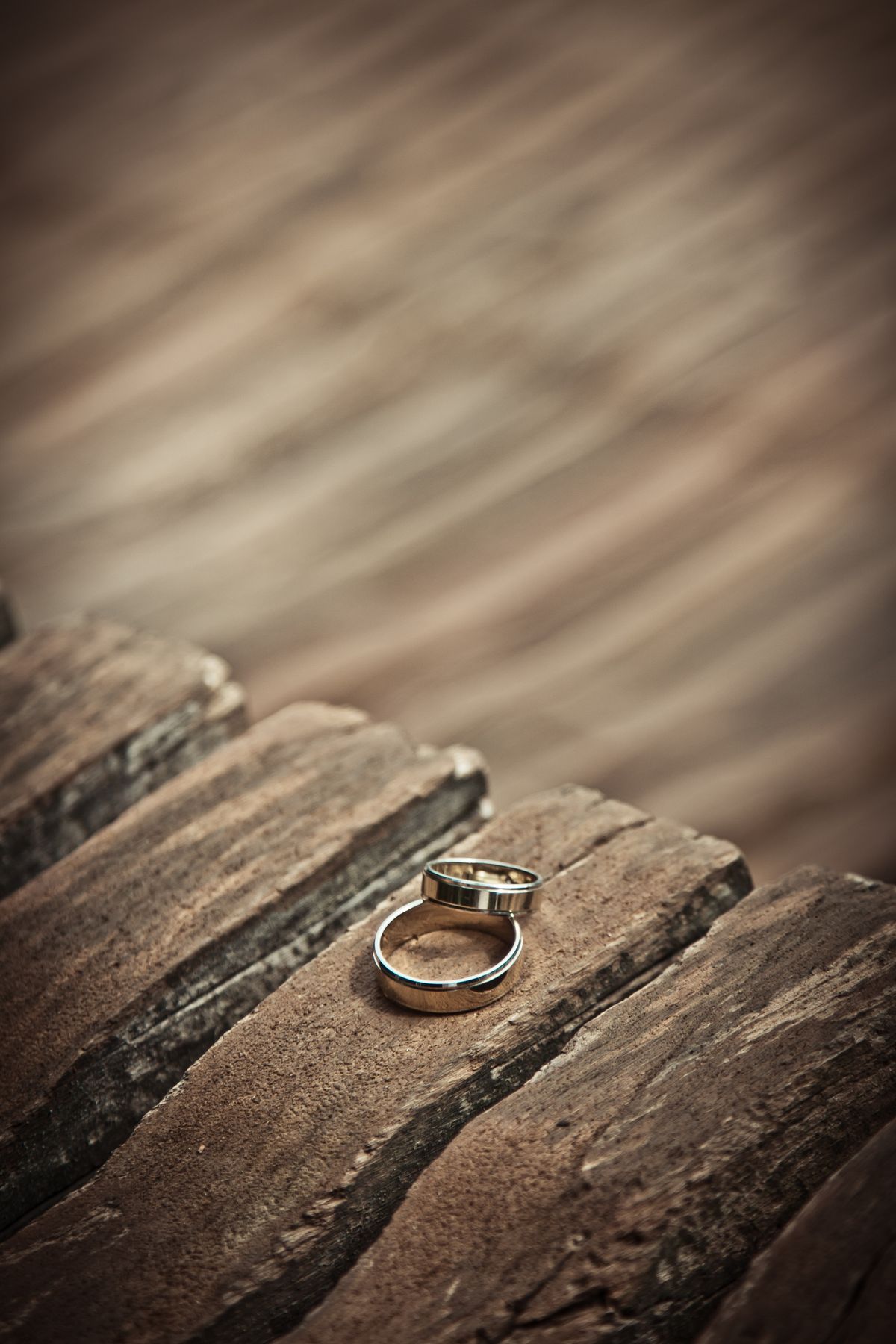
What does a white gold men's wedding band cost?
Three factors determine the price of a white gold band: gold content, weight, and seller's price. Men's rings are wider and therefore cost more than women's bands because they use more metal. Metal bands use different karat gold. 18k bands use more gold than 14k bands, which in turn, use more than 10k bands. A fair maker will sell a 14k band for hundreds of dollars while a designer will sell the same 14k band for thousands of dollars. The more karats, the more valuable the band.
As a working range, a plain 14k white gold men's wedding band usually lands between $500 and $2,000, and wider or 18k pieces climb past that. But the sticker isn't the whole cost. White gold is the rare wedding metal that keeps charging you after the sale, since the rhodium finish that makes it look white doesn't last forever. Factor the re-plating into the lifetime number and the gap between white gold and a silver-tone tungsten band widens fast. For a full breakdown of how tungsten pricing works, our honest guide to tungsten ring pros and cons lays it out.
The rhodium re-plating problem nobody mentions
Most people get confused about this part. The ring's white shiny surface is a rhodium coating. The coating is very thin, only a few microns, and over time will wear away. This can happen as fast as one year, and as long as three, depending on how much of a beating the ring takes. Gradually, the gold alloy will start to show through, giving a warm gray tone. Wherever the ring rubs against things, that's where the gold will show through first. The ring is not broken, that's just what plated metals do.
A jeweler fixes this by putting rhodium back onto the ring. This is usually fairly inexpensive, ranging from 60 to 150 dollars, and, compared to the cost of the ring, isn't very much. However, you have to take it to the shop fairly frequently over the years, and it can add up over time. A tungsten wedding band doesn't have to be re-plated, so there is no repeat trip to the jeweler. Men who compare white gold to yellow gold for the same reasons will find our tungsten vs gold wedding bands comparison useful, and the tungsten vs platinum guide covers the other white precious metal people ask about.
Who should buy white gold, and who shouldn't
White gold is the right choice for a specific type of customer: if you want a real precious metal, like a ring you can resize, or if you want to buy a family heirloom that you will maintain for many years, white gold is worth the price. Some men just want gold on their fingers and that reason is fair on its own.
Not everyone agrees with that, though. If you love the bright silver look, want a ring that can withstand daily wear, and don't want the hassle of having to re-plate your ring, a silver-tone tungsten band is the way to go. It will look nearly identical to white gold, but won't cost you a fortune over time. If you're thinking of choosing between a few different types of metals, our guide on how to choose a wedding band is a great place to start.
Which FoundryCut bands look like white gold?
If you like the look of white gold but want to skip the cost of coating and avoid the repeated payments, several FoundryCut bands give you that option. Ingot is the best place to start. It's a silver matte tungsten band with a simple beveled edge, which looks like a plain white gold band but is much less of a hassle. If you want a band that is even flatter and more minimal, Seam is similar but a little more modern. If you want a little more of a design, with a more warm and inviting color, Sentry has a silver matte face and a rose gold interior. They are all nickel-bonded tungsten carbide bands, and each one is a different take on the same silver-gray look.
To compare these bands, view our silver rings collection to see all our silver-tone bands or browse our men's wedding bands. If you want to see other color options, check out our men's silver wedding bands and gold tungsten rings guides.
Common questions about white gold men's wedding bands
Is white gold good for a men's wedding band?
Yes, if you want a true precious metal and do not mind the upkeep. White gold looks sharp and can be resized, but it is soft, so it picks up scratches, and the bright finish is rhodium plating that needs to be redone every few years. If you want the look without the upkeep, a silver-tone tungsten band is a good option.
How much does a white gold men's wedding band cost?
A plain 14k white gold men's band usually runs about $500 to $2,000, with 18k or wider designs going higher. Remember that white gold also has an ongoing cost, because re-plating the rhodium finish is a recurring expense for as long as you own the ring.
Does a white gold ring need to be re-plated?
Most white gold rings do need this. The white shine is a thin rhodium coating that wears down with daily use, usually within one to three years. Re-plating restores the finish and costs roughly $60 to $150 each time. A silver-tone tungsten ring never needs this.
Is white gold or tungsten better for a men's wedding ring?
Ultimately, it comes down to preference. White gold is soft and can be resized, tungsten is cost effective and requires no upkeep, but cannot be resized. For the look and low maintenance, tungsten wins. For precious-metal value and resizing, white gold has the edge.
Does white gold turn yellow?
They can look like that because white gold is really a pale yellow alloy under a rhodium coating, and as that coating wears, a less bright color can start to show. The bright white color can be brought back: the coating can be re-done.
Can a white gold wedding band be resized?
Yes, you can resize white gold bands, and that's an advantage of using white gold over harder metal options. Tungsten bands can't be resized, so fit changes are handled by exchanging for a band of the correct size at most makers, including FoundryCut.
The likeness to white gold is decorative and desirable, and you can get the look without breaking the bank. If you want that look with no expensive upkeep on a band built for everyday life, check out the silver-tone tungsten rings and spend the money you save on the rest of the wedding. You can check out our silver rings collection up close and personal.


