
Picking a wedding band isn't really about looks. It's about choosing a band you can wear daily without babying it, based on how you actually live. This guide walks through the five factors that matter: metal, width, fit, finish, and how much to spend. There is no upsell from jewelers and no fashion lectures, just the calls that decide whether a ring still works on your hand forty years from now.
Start with how you actually live
Most men pick a ring by looking at it. Look at your hands first instead, since the single biggest factor in choosing a wedding band is what you do all day, which decides what survives and what gets babied into a drawer.
Having an honest understanding of your typical day can help you determine how much versatility you need in your ring's style. Are you at a desk, using a keyboard, or shaking hands? Then you have more room for stylistic freedom. But if you're using wrenches, lifting heavy items, framing houses, or working around live wiring, durability and safety move to the front of the line (see our wedding band guides for working hands), and a soft precious metal is the wrong tool. If you spend a lot of time at the gym, or work on job sites where a ring can catch on something, you want something cheap to wear hard, plus a backup you can swap in. Our guide to the best wedding bands for mechanics and construction workers goes trade by trade on width, profile and material.
Knowing your category of style, and being in an industrial or office setting will help you simplify your ring decision. A guy who works with his hands and a guy who sits in meetings aren't choosing the same ring, and pretending otherwise is how people end up replacing a band twice in five years.
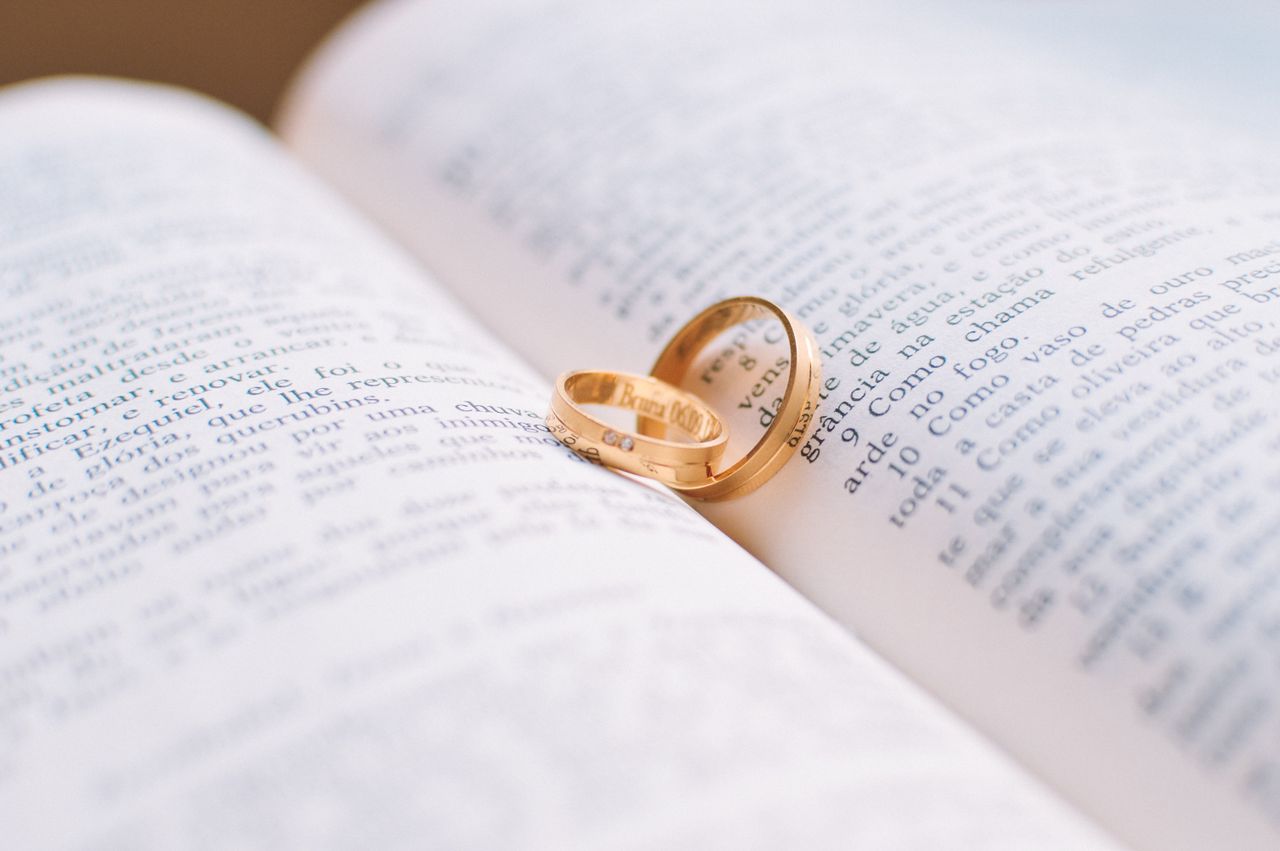
How do you choose the right metal for a wedding band?
Metal is the biggest decision you'll make: it sets durability, weight, price, and how often you think about the ring. Get this right and the rest is detail. Here's the honest read on the materials men actually buy.
Tungsten carbide is a perfect everyday ring for active men. It holds its finish through daily wear, and sits in an accessible price range. The downside: it's a very hard material, and hard means it doesn't bend, so it cannot be resized. If that's a concern, check out our guide to resizing a tungsten ring for alternative options.
Gold is tradition, and it's resizable, which matters if your fingers change over the years. The catch: 10k to 14k gold is soft, so it picks up scuffs and dents from real work, and it carries the highest price of the common options. We lay out the full trade in tungsten vs gold wedding bands. Titanium is light and low-key if you hate feeling a ring at all, and silicone isn't a forever ring but is the right call for the gym, the job site, and travel, pairing well with a metal band you save for everything else.
| Metal | Best for | Keep in mind | Price tier |
|---|---|---|---|
| Tungsten carbide | Hands-on work, daily wear, holding a finish | Does not bend, so size it right the first time | $ accessible |
| Gold (10k to 14k) | Tradition, warm tone, easy resizing | Soft, so it shows scuffs and dents over time | $$$ high |
| Titanium | A barely-there feel and a low profile | Muted gray tone, fewer finish options | $$ mid |
| Silicone | Gym, job site, travel, water | A backup, not a forever ring, replace as needed | $ cheap |
| Cobalt or ceramic | A white-metal look without the gold price | Ceramic can crack from a hard drop on tile | $$ mid |
Most of our customers take the practical approach: tungsten for a reliable everyday band, silicone for the rough stuff. A great example of an everyday tungsten ring in our lineup is Ingot, which is our most no-nonsense profile, and our best-seller is the black-matte Monolith.
Should you pick a 6mm or 8mm wedding band?
Width alters the appearance of a ring more than any other measurement. There are really only two numbers that fit almost everyone: 6mm and 8mm. An 8mm ring looks large and substantial and fits larger hands, while a 6mm ring looks and feels thinner, lighter, and sits more inconspicuously on smaller hands. If a slimmer band is where you're leaning, our 6mm men's wedding band buyer's guide covers who the width suits and how it wears day to day.
Since most average sized hands are on the larger side, the rule is to try 8mm first. If you'd prefer the ring to occupy less space, or you work with your hands a lot and want less chance of catching on things, 6mm is the way to go. Width also affects choice of finish: a wider ring is more of a statement than a narrower one, especially when one is wide and matte and the other is narrow and polished. If you want to keep your options open, Monolith offers ring widths of both 6mm and 8mm, so you can match the width to your hand instead of the other way around. We break the choice down by hand size and lifestyle in our full guide to 6mm vs 8mm ring width.
Fit and profile: comfort, domed, beveled, flat
Fit is the part that guys ignore, and the part that brings the most regret. Two rings in the same size can feel completely different depending on the inside shape: a comfort-fit band is rounded on the inside, so it slips over the knuckle and sits better through a long day. A standard fit has flat inside walls, and has a more locked-in feel. If you've never owned a ring, check out our breakdown of comfort fit and standard fit before you decide what size to get.
The outside shape, the profile guide, is about a look and a feel. A domed band is rounded on top, and looks classic and soft. A flat band is square and minimal. A beveled band has angled edges for a sharp and modern look. None of these are inherently better than another, and it is all about preference, but the profile of the band sets the entire character of the ring. Our profile guide shows each one on the hand: a curved comfort feel in Halcyon, a clean squared-off minimal band in Seam. A ring you can't stand to wear is the most expensive ring, because you made an investment that most likely will be useless. For help on a better fit, start with how a ring should fit.
Finish and color: matte, polished, black, inlay
The Finish is the point in our process where the ring truly belongs to you. To start, you'll make a choice between a matte or polished finish. A matte or brushed finish is a bit more understated, while a polished finish is more bright and can be a bit more formal. A polished surface shows more wear after a rough week, and you can find them compared in brushed vs polished.
The next layer is Color. The classic silver-tone is an easy, timeless choice and black has been the most popular for clients looking for a modern option. Black matches very well with gray and blue wardrobes and pairs nicely with a gray or blue watch. After these choices, come the accents: gold or rose gold linings, a blue inlay, or wood or stone finishes. Black-matte Monolith, black-and-rose-gold Helm, and the blue-accented Tide rings take customers from a plain ring to a more personal option. You can take a look at our full set of black tungsten rings or our collection of men's wedding bands to see a variety of finishes and options.
How much should you budget for a wedding band?
Forget the old line about spending two or three months of salary, invented to sell rings, not to help you choose one. A wedding band is something you wear every day for decades, so the real question is value over time, not sticker price. We dug into the actual numbers in our guide to how much a wedding ring should cost.
This is a practical consideration: a soft gold band can cost multiple times what a tungsten band does but will still take more scratches from the same job. It makes more sense for a lot of men to buy a hard everyday band, avoid the unnecessary markup and keep the difference. Every FoundryCut band is built to take a beating with a price set based on the market instead of the tradition norm. If your budget is limited, we offer a good selection of the best affordable men's wedding bands under $150. Our top selections are from our Signature collection.
What is the final checklist for choosing a wedding band?
Put it all together and the decision is a short sequence, not a guessing game. Work through it in this order and you'll land on the right ring without second-guessing:
- Name how you use your hands. That decides durability and how hard you can wear the ring.
- Pick tungsten for a hard everyday band, gold if tradition and resizing matter most, or silicone as a backup for the rough stuff.
- Go 8mm for presence and larger hands, or 6mm for a leaner feel and hands-on work.
- Choose comfort fit for all-day ease, then domed, beveled, or flat to set the character.
- Go matte to keep it low-key or polished to dress it up, then pick silver, black, or an accent that feels like you.
- Spend on what you'll actually wear, not on a markup, and keep the rest.
Still comparing styles? Our best wedding bands for men guide lets you cross-shop all of the top picks. For all styles of wedding bands, our guide lets you inspect every band by metal, finish, profile, and width. Once the style is settled, the next question is timing, and our guide to when to buy wedding bands covers how much runway to leave for sizing, engraving and an exchange.
Frequently asked questions about choosing a wedding band
How do I choose a wedding band if I work with my hands?
Choose a tough ring first. Gold is soft, so a tungsten carbide ring will keep its finish longer, and if something does go wrong, it is cheaper to replace. Use a silicone band for work or the gym, and you'll be covered for everyday and rough days.
What width wedding band should a man get?
Most men go for either 6mm or 8mm. If you've got average to large hands, an 8mm width will give a more substantial look. 6mm, on the other hand, provides a sleeker look. This width will also allow the ring to get out of the way during hands-on work. If you're really unsure, start with an 8mm and only go for 6mm if the 8mm feels really substantial.
Should my wedding band match my partner's?
It is your call, not a rule. Plenty of couples coordinate by metal tone or finish without buying identical rings, which lets each person get a width and profile that actually fits their hand. Matching the vibe matters more than matching the exact ring.
Can a tungsten wedding band be resized?
No, tungsten carbide is too hard to bend, so it cannot be stretched or compressed like gold. The upside is that the same hardness is what keeps it looking sharp. Size it carefully up front, and if your finger changes later, the fix is a new band rather than a resize.
How much should I spend on a wedding band?
Don't go overboard, but get a ring you'll want to wear every day. The two-months-salary rule is a sales gimmick. Tungsten costs less than precious metals and holds up better to daily wear.
Matte or polished finish, which is better?
Matte and brushed finishes are understated and hide the marks of daily wear. Polished finishes are brighter and more formal but show wear more clearly. If the ring spends its life on a working hand, matte ages more gracefully, but if the ring sits on a mostly idle hand, polished gives a more beautiful shine.
Selecting a wedding band is a series of five answers about your own hand, listed in the order of your life, metal, width, fit, finish, and budget. After all that, the ring shows up ready for you. Browse the full collection of men's wedding bands to see the actual ring options that go along with your answers.


