
The difference between a brushed and polished tungsten ring is more than visual. A polished finish reflects light like a mirror, sharp, dressy, formal. A brushed finish softens light into a matte glow, quieter, more modern, more forgiving. They look different from across a room and they age differently over years of wear. The right choice between a brushed vs polished tungsten ring depends on how the ring fits into your life: how dressed-up you are most days, what your hands do, and which look you actually want to glance at on your finger ten years from now.
The quick take: which finish wins?
Neither finish is the outright winner. They win at different things.
Polished tungsten wins on dressy occasions, photographs, and reflective drama. It catches light like jewelry. It also shows micro-scratches more visibly because the mirror surface is uniform. A single scratch breaks the reflection.
Brushed tungsten wins on everyday wear, modern outfits, and forgiving long-term aging. The matte texture hides micro-scratches because the surface is already broken up by directional grain. It feels less "ring," more "object you'd want to wear."
If you want the ring to feel like a quiet daily wear, go brushed. If you want it to read as a wedding band the second someone glances at it, go polished. Both are tungsten carbide underneath, both will outlast you, and both look great. The choice is taste, not quality.
There's also a third option worth considering: hammered tungsten. A hammered finish creates irregular faceted dimples across the surface, catching light at unpredictable angles. It reads as more rugged and handcrafted than either brushed or polished. Forge is FoundryCut's hammered ring, faceted tungsten in multiple colorways that looks like it was shaped by hand rather than a machine.
How is each tungsten finish actually made?
Both finishes start from the same tungsten carbide blank. The metal underneath is identical. The difference is what happens at the very last stage of manufacturing, the surface treatment that gives the ring its visual character.
Polished tungsten is created by progressively finer diamond compounds. The blank goes through grinding wheels with diamond grit at decreasing particle sizes, 60-grit, 200-grit, 400-grit, 600-grit, 1200-grit, sometimes finer. Each pass removes the marks from the previous pass. After enough stages, the surface is so smooth at the molecular level that it reflects light coherently, which is what makes it look like a mirror.
Brushed tungsten takes a polished blank and runs it under abrasive belts or wire brushes that leave a controlled pattern of parallel micro-scratches. The result is a uniform satin texture that scatters light instead of reflecting it. The "brushed" look is literally engineered scratching, intentionally applied so the surface looks consistent.
For more on the manufacturing process from start to finish, see our guide on how tungsten carbide is made.
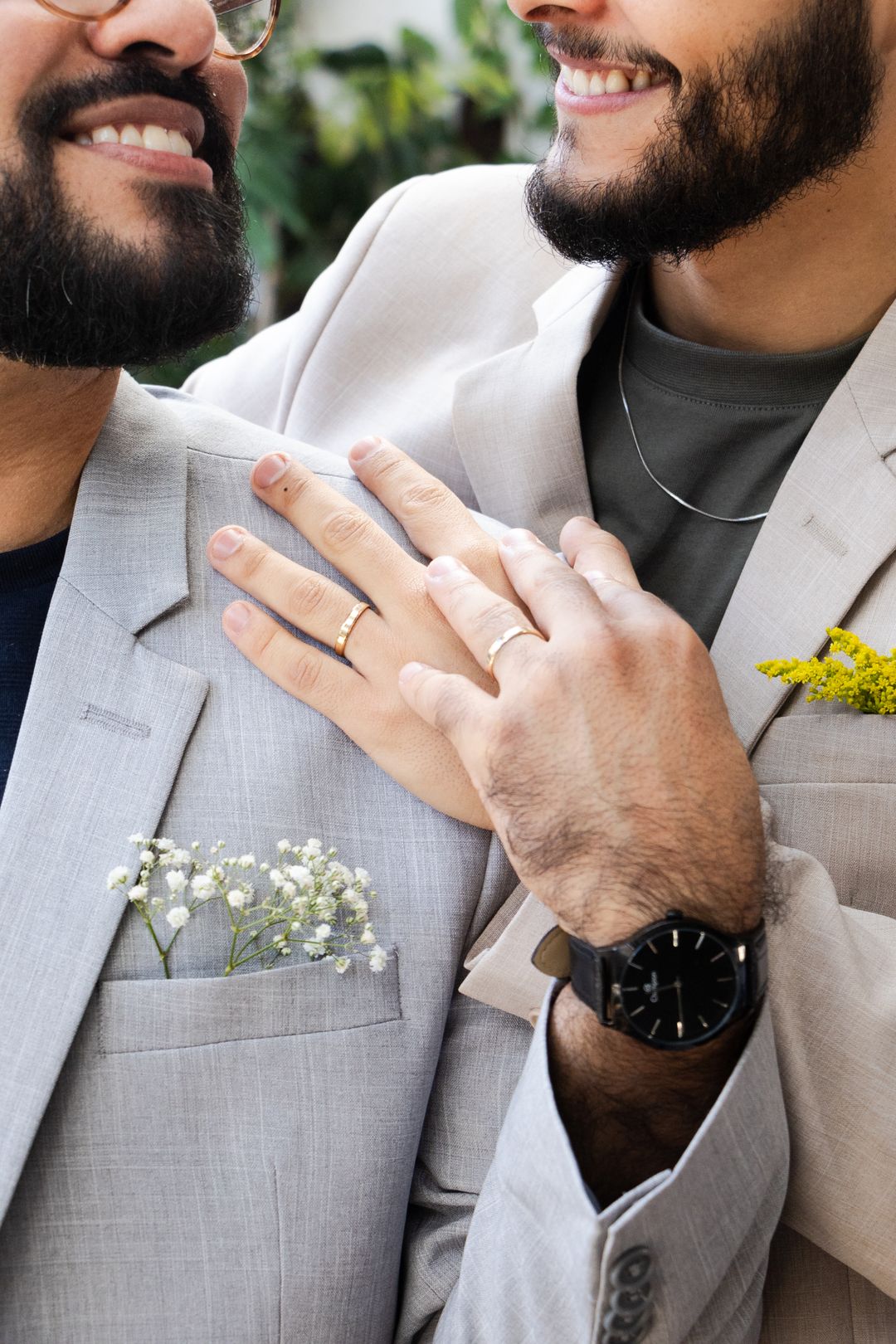
How brushed and polished tungsten look on an actual hand
The way a finish looks on a manufacturer's product page is different from how it looks on a working man's hand. Here's what each really looks like in real life:
Indoors, a polished ring catches every overhead light and reads as bright silver or chrome from a few feet away. In photos it looks dramatic, with sharp white reflections against the band's profile. Outdoors, mirror tungsten picks up the sky, so on a clear day the band looks pale silver-blue and in sunlight it can flash hard reflections that draw the eye. After a year of wear, micro-scratches break up the mirror finish and the shine softens slightly, but only on close inspection. From any normal viewing distance it still looks polished.
Indoors, a brushed ring is soft and quiet. It still has presence, still tungsten, but it doesn't grab light, and it looks like brushed steel, gunmetal, or matte silver depending on lighting. Outdoors it mostly stays the same color, because the matte texture means there's no big sky reflection and no hard flash, just consistent satin gray. After a year of wear the aging is almost invisible, since the intentional micro-grain makes new micro-scratches blend in. Most owners say a brushed tungsten ring looks identical to the day they bought it after years of daily wear.
Which finish holds up better over years of wear?
The brushed vs polished tungsten ring choice gets practical here. The metal is the same, since both finishes ride on tungsten carbide, hardness 9 on the Mohs scale, harder than anything you'll regularly contact. Neither finish actually scratches under normal wear. The visible surface, however, ages differently.
A polished tungsten ring's surface is mathematically smooth. Light reflects off it coherently, which is what makes it shine. Any disturbance disrupts the coherent reflection and shows up as a dull spot: a tiny scuff, a hair-line scratch, residue from soap. The scratches are too small to feel. They just slightly mar the mirror.
A brushed tungsten ring's surface is intentionally rough at micro-scale. New scratches that appear at the same scale blend into the existing pattern. You'd need to put a deep gouge into the surface for it to be visible from across a room.
The end result: if you work with your hands, lift weights with grip work, or do anything where the ring contacts hard surfaces regularly, brushed is the lower-maintenance choice. It doesn't actually last longer. It just stays "looking new" with less effort.
That said, "less new looking" on a polished ring after a year is still better than a gold ring after a month. Tungsten of any finish wins durability against virtually every common metal. For the bigger comparison, see our guide on tungsten ring pros and cons.
Brushed vs polished tungsten ring: side-by-side comparison
| Quality | Brushed | Polished |
|---|---|---|
| Visual style | Matte, modern, understated | Mirror, classic, dressy |
| Light behavior | Scatters light, soft glow | Reflects sharply |
| Hides micro-scratches | Yes, naturally | No, visible on inspection |
| Best with | Casual, work, modern outfits | Suits, formal occasions |
| Visible fingerprints | Rare | More noticeable |
| Manufacturing time | Slightly faster | Longer (more polishing stages) |
| Long-term look | Ages quietly, stays uniform | Slight dulling, still mirror at distance |
How do you choose between brushed and polished?
The decision usually breaks along three lines. Walk through them in order:
What's your default outfit?
If you wear suits, dress shirts, or formal-leaning everyday clothes, polished sits naturally with that vocabulary and reads as jewelry. If you wear t-shirts, hoodies, work boots, or anything that leans casual or technical, brushed reads more naturally with that vocabulary. It reads as a tool, an object, part of your everyday kit.
This isn't about being limited to one. A brushed tungsten ring still looks fine in a suit. A polished ring still works in jeans. But the easier match cuts down on the "ring is doing too much" feeling.
What do your hands do?
If your hands are constantly in motion with hard contact, trades, lifting, mechanic work, kitchen, brushed is the easier-living choice. It hides the inevitable micro-marks that come with hand-on-hard-surface contact.
If your hands mostly hold a keyboard, a phone, and a coffee cup, either finish lasts essentially forever without showing wear, so choose on aesthetics.
Do you want the ring to be noticed or to disappear?
Polished asks to be noticed, and the mirror catches eyes. Brushed disappears quietly into your hand and only reveals itself on closer look. Some guys want a wedding ring that visually announces itself. Some want one that just feels right without making a statement.
If you want a starting point: Ingot is the cleanest classic profile in our lineup. Monolith in black matte is the bestseller for the brushed-modern direction. For more on which width pairs with each finish, see our guide on 6mm vs 8mm ring width. Or browse the full collection to see both finishes side by side.
Whichever finish you land on, the upkeep is the same two minutes a week, with one wrinkle: a brushed band wants to be wiped along the grain, and a mirror band wants a final buff with a polishing cloth. Our guide to caring for a tungsten ring walks through both routines.
Common questions about brushed and polished tungsten rings
Can a brushed tungsten ring be polished later?
Technically yes, but practically rarely worth it. Tungsten carbide is so hard that re-polishing requires diamond compounds and equipment most jewelers don't have. Most brands won't refinish a ring and will exchange it instead. If you want the option, decide on polished from the start.
Does brushed tungsten scratch easier than polished?
The metal underneath is the same, both rate 9 on the Mohs scale and resist scratching from anything except diamond, sapphire, or other tungsten. What's different is how visible new scratches are. Brushed hides them and polished shows them. Neither actually scratches more easily.
Which finish goes better with rose gold or yellow gold inlays?
Both work, but the contrast is different. Polished tungsten with a gold inlay reads more formal. The mirror plays off the gold's warmth. Brushed tungsten with gold inlay reads more modern and understated, since the matte exterior lets the gold be the visual anchor without competing.
Will a polished tungsten ring stay shiny forever?
Tungsten doesn't tarnish, so the metal stays mirror-grade indefinitely. What changes over time is surface micro-scratches that slightly soften the mirror reflection on close inspection. From a normal viewing distance, a polished tungsten ring still looks polished after years of wear.
Is one finish more expensive than the other?
Polished tungsten typically costs slightly more to manufacture because of additional polishing stages with finer diamond compounds. The price difference is usually small, under $10 to $20, and many brands price both finishes the same.
Brushed or polished, the underlying ring is the same nickel-bonded tungsten carbide either way. The choice is about how you want the ring to read on your finger: quietly modern or sharp and classic. Every FoundryCut ring is built to last decades in either finish. See the best sellers or start with Ingot.
FoundryCut brushed vs polished examples
- Ingot, brushed silver, the matte classic.
- Hearth, polished rose gold with antler.
- Or browse every ring in All finishes →


