
You may think tungsten and ceramic rings are essentially the same, but once you hold them, the difference is obvious. Tungsten carbide is twice as dense as ceramic and is rated 9 on the Mohs Hardness Scale. Engineered ceramic is rated between 8 and 8.5. Both of these materials are tougher than gold and platinum, but wear differently. This guide will analyze tungsten and ceramic rings on hardness, weight, scratch resistance, comfort, price, and emergency removal, as well as where they should go on a man's hand.
What are tungsten and ceramic actually made of?
Tungsten carbide is a metal-ceramic composite. Tungsten and carbon are powdered and bonded with a small percentage of nickel and are fused under heat and pressure into one piece. This combination creates a cermet. FoundryCut uses nickel-bonded tungsten carbide, the hypoallergenic option for the small share of men who react to cobalt.
When talking about rings, ceramic means zirconium dioxide (zirconia) or titanium carbide ceramic. Both of these are fired into a fully non-metallic ring. Tungsten ceramic is a marketing tactic for tungsten carbide. A true ceramic ring contains zero tungsten. For this guide, ceramic means pure ceramic rings, not tungsten carbide. Black zirconium gets confused with both. It is a zirconium metal band whose outer skin has been converted to a hard oxide in a furnace rather than a fully ceramic ring, and how black zirconium compares to tungsten is covered separately.
Tungsten vs ceramic ring: head-to-head spec table
The data below comes from published material concerning how each wedding band ring type will perform in the 2026 wedding band market. For now, you can consider this data to be an honest baseline before any marketing claims are made.
| Property | Tungsten Carbide | Ceramic |
|---|---|---|
| Mohs hardness | ~9 | ~8-8.5 |
| Density | ~14.5 to 15.0 g/cm³ (heavy) | ~6.0 g/cm³ (light) |
| Weight feel | Substantial, you feel it | Light, almost forgettable |
| Scratch resistance | Very high (everyday surfaces) | High (slightly below tungsten) |
| Shatter risk | Can crack on hard impact | More brittle, chips more easily |
| Color options | Silver, black, gold, rose, two-tone | Black, white, mostly monochrome |
| Hypoallergenic | Yes (nickel-bonded) | Yes |
| Resizable | No, replace instead | No, replace instead |
| Emergency removal | Cracked off with vise grips | Cracked off the same way |
| Typical price (men's band) | $150-$400 | $100-$300 |
| Inlay options | Stone, antler, and cosmic inlays | Limited |
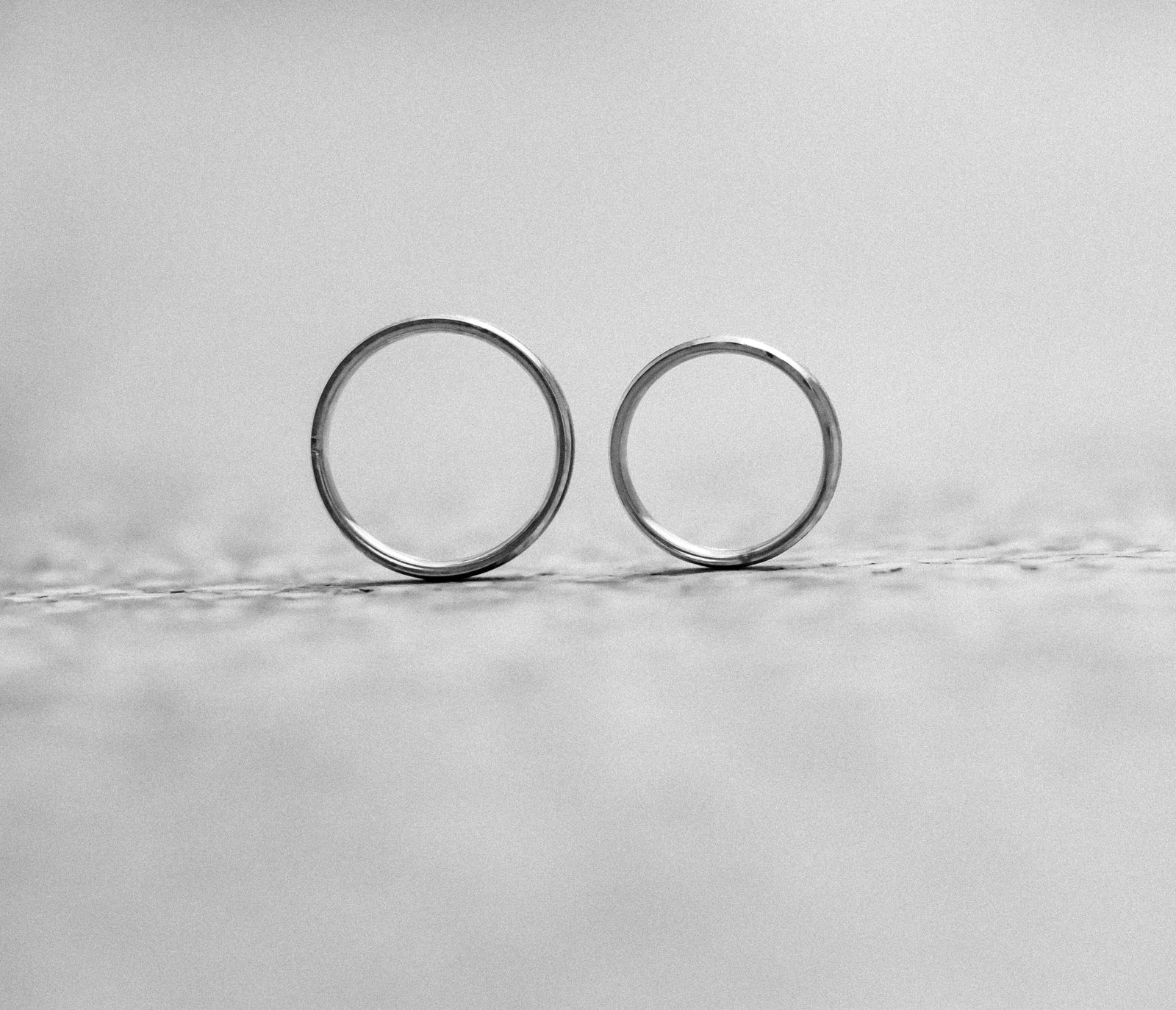
How each material wears over years of daily use
A chart with hardness numbers is a poor indicator of how a ring will hold up while being worn. Tungsten and ceramic both withstand scratches that will destroy gold rings from contact with things like keys, gym bars, granite countertops, and car doors. However, they both fail in a similar manner when a sufficient amount of force is applied to them.
Tungsten carbide can withstand a daily beating and remain mirror-smooth or matte-clean depending on the finish. What ultimately takes a tungsten ring out is a sudden impact against a force that will not give, like concrete, a hammer, or a kettlebell drop at the gym. When it breaks, it will either split into two clean halves or crack through one side, rather than slowly chip down. It's either in perfect condition or in two halves.
Ceramic has a slightly lower hardness than tungsten carbide, and a more brittle internal structure. Day-to-day scratch resistance is still very good, better than steel or titanium, but a hard impact is much more likely to chip than crack the ring cleanly. Black ceramic will visibly show chips more than black tungsten, because the chip exposes a different micro-texture under the polish.
In most office or trades work days, both materials look like they are new at the five-year mark. The real difference shows in edge cases: a tungsten ring is more likely to survive a single big impact without breaking, while a ceramic ring is more likely to suffer a small visible chip from a series of small impacts.
Weight, comfort, and how each feels on the hand
This is the single biggest difference most guys notice when holding both rings. Tungsten carbide is almost 2.5 times denser than ceramic. A 6mm tungsten band weighs almost the same as an 8mm gold band: substantial, balanced, and you forget about it during the day, but notice it when you take it off. A ceramic ring in the same size feels closer to a titanium ring or even a silicone ring: light and almost invisible on the finger.
Asking which ring is "better" is a question of preference, not a question of quality. Guys used to a gold wedding band usually pick tungsten because it feels like a real ring, as opposed to a placeholder. Guys who dislike jewelry on their hands usually opt for ceramic for the opposite reason: they want the ring to be invisible.
For more on how ring weight changes daily wear, see our breakdown of how heavy tungsten is versus other ring metals.
How do price, color options, and resizing compare?
As far as cost is concerned, tungsten and ceramic rings are similar. Entry level ceramic rings cost slightly less than entry level tungsten rings because tungsten powder is more expensive than the raw ceramic powder. However, at the men's wedding band quality level, both tungsten and ceramic rings cost between $150 and $300. Consequently, anything offered at a price below that range would typically be a thin, plated ceramic or tungsten ring that will not function like a quality tungsten or a quality ceramic ring.
Where you will see the biggest difference is in color and finish. Tungsten carbide is the top choice for contemporary men's bands because tungsten carbide holds a great finish. Tungsten rings are available in black, gold and rose gold tones, two-tone hammered finishes, and deep matte black with cosmic and stone inlays. On the other hand, ceramic rings mostly come in black and white with limited inlay options because the ceramic body is difficult to finish.
Neither ceramic nor tungsten rings can be resized, and therefore both will have to be replaced. For tungsten specifically, we wrote a full guide on what to do instead of trying to resize, and the playbook is identical for ceramic.
Can a tungsten or ceramic ring be removed in an emergency?
The idea that hard rings are dangerous is a myth. Both tungsten and ceramic rings are meant to break off under controlled pressure rather than cut into a swollen finger. Emergency rooms have been doing this for years. The standard tool is a pair of locking pliers that compress the ring and crack it into two pieces to fall away from the finger.
Tungsten separates into two large pieces along the line of force, but the more brittle ceramic breaks into a few. In finger swelling emergencies, both materials are better because they come off quickly, unlike gold or platinum, which require a small saw for removal and are more difficult to do on a finger that's swollen.
Which ring fits your job and daily life
The best option primarily comes down to what your hands do, not a spec sheet. Both materials are harder than gold and silver. In an office setting, both will look the same at the end of five years. When you add impact, heat, and grip to the day, the decision to weigh materials gets real.
For trades and hands-on work, tungsten holds up better over time than ceramic, which is more sensitive and more easily chipped. When working with live electrical current, both materials behave differently than a plain metal band, and we look into more detail in our guide to tungsten ring safety for electricians, plus the broader trades case in the wedding bands for mechanics and construction workers breakdown.
If you want a band that looks like a real ring but is super light, go with ceramic. If you want one band that can go from the gym to the yard to the office without having to think about it, pick tungsten. If you're still trying to figure things out, our guide on how to choose a wedding band goes through metal, width, and finish in that order.
Common myths about tungsten and ceramic rings
Both tungsten and ceramic bands have the same sets of internet myths, and most of those myths fall apart under a closer examination.
"Ceramic and tungsten bands shatter when dropped" isn't true. It actually takes a lot of force to fracture either of those materials, and the ring breaks into a couple pieces. Neither shatters when dropped normally. We ran the full stress case in our post on do tungsten rings shatter, and ceramic behaves the same way but with some edge chipping.
"You can never get one off in an emergency" is also false. A hard ring cracks off in seconds under locking pliers, which is faster and gentler on a swollen finger than sawing through gold. The emergency removal guide shows how that works step by step.
"Ceramic is basically the same as tungsten" is an oversimplification. Yes, they can be hard and black, and look similar, but tungsten is 2.5 times denser and harder, while ceramic is lighter and comes in a narrower color range. The right one depends on whether you want a heavier or a near weightless band.
Who should choose ceramic, and who should skip it?
Ceramic is ideal for the person wanting the lightest possible wedding ring. Silicone is a light ring option, but ceramic is a great option if you don't want the weight but still want a solid upgrade.
You should absolutely skip ceramic rings if:
- You want anything other than black or white: color options are genuinely limited.
- You prefer a metal-like luster: ceramic reads as "matte modern" rather than "metal."
- You want the heft of a traditional wedding band: ceramic feels closer to a silicone gym ring.
- You work in a job with frequent edge impacts (carpentry, masonry, framing): ceramic chips on edges before tungsten cracks.
- You want inlays: antler, stone, cosmic, wood inlays are almost all done in tungsten or titanium, not ceramic.
Tungsten is the better option in this case, and it covers most men's wedding bands, and there's a good reason for it. The niche for ceramic rings isn't as broad as its marketing would suggest.
Why FoundryCut builds in tungsten carbide
At FoundryCut, every ring is made of tungsten carbide, which is nickel-bonded, built for daily wear, and cut into profiles that men want. These profiles include options like black matte, silver with a brushed finish, gold, rose gold, hammered, beveled, domed, and rings with stone, antler, and cosmic inlay options.
If you want a clean classic, Monolith is a black matte best seller and comes in both 6mm and 8mm. The cleanest option for a silver matte ring is Ingot. For more of a profile, Helm has a black matte with a hidden rose gold interior, and full black with a blue inlay is Tide. The same construction of nickel-bonded tungsten carbide applies to all these options.
Browse the full lineup in our tungsten rings collection, or jump straight to the black tungsten rings collection if you're cross-shopping black ceramic.
For more on the material itself, our tungsten pros and cons guide covers what tungsten does well and where it falls short, the tungsten vs titanium comparison is the other big material decision most guys are weighing, and the tungsten vs cobalt breakdown covers the third common alternative-metal cross-shop.
Common questions about tungsten vs ceramic rings
Is a ceramic ring stronger than a tungsten ring?
Tungsten carbide has a Mohs hardness of about 9, while ceramics fall between 8 and 8.5, and in addition, tungsten has a much higher density. Tungsten resists everyday scratching slightly better and survives single hard impacts more often. Ceramic holds up against scratches better than most people think, but the gap in hardness really exists.
Will a ceramic ring scratch easier than tungsten?
A bit, yes, but both materials are far harder than gold, silver, and platinum. In a typical lifetime of an office or trade job, the difference should be negligible. The difference does show in extreme environments like the gym, granite countertops, or hand tools.
Can ceramic rings break?
Both ceramics and tungsten can crack, but ceramic tends to chip and break into multiple pieces, while tungsten tends to break into two pieces. The design of both materials is a safety feature. A fractured ring will come off your finger faster than a ring that has to be cut off with a saw.
Why is tungsten heavier than ceramic?
It comes down to density. Tungsten carbide has a density of about 14.5 to 15.0 g/cm³. This would make it about 2.5 times denser than ceramic, which has a density of about 6 g/cm³, and about 2 times more than steel. That density is also what gives tungsten its hardness and its substantial feel on the finger.
Are tungsten and ceramic both hypoallergenic?
FoundryCut's nickel-bonded tungsten carbide is hypoallergenic for the men who avoid cobalt-bonded tungsten. Ceramic is naturally hypoallergenic, since it contains no metallic components at all. If you have a known nickel or cobalt sensitivity, ask any tungsten brand which binder they use before you buy. We use nickel here at FoundryCut.
Which lasts longer, tungsten or ceramic?
Tungsten and ceramic rings both typically look new for up to five years with normal wear and tear. After that period, tungsten has a better track record for one major impact, while ceramic has a slightly higher chance of an edge chip over a ten-year period of hard use.
Is ceramic or tungsten better for someone who works with their hands?
For manual work, tungsten is the better option since it is better able to take one major hit compared to ceramic, which is more likely to chip. Both options are far more durable compared to gold and silver, so neither shows the scratches that a softer metal would.
Can tungsten and ceramic rings be engraved?
Both options are too hard for hand engraving, so a laser is used. A laser cuts a clear, permanent mark. Before making a purchase, be sure to ask the seller if engravings are an option as not every finish allows for laser engraving.
If you're cross-shopping tungsten vs ceramic, the underlying question is usually which one feels right on your hand, heft or light, color range or minimalist. Both will outlast a gold band. Tungsten gives you more variety and a more substantial feel. Ceramic gives you the lightest profile that still reads as a real wedding ring. Start with the FoundryCut tungsten collection if you want to see what the heavier side of that decision actually looks like.


