
Tools, torque, voltage, and heat are merciless on a wedding ring. The wedding bands for construction workers and mechanics that survive longest are built for the job, not for how they look in a jewelry case. This guide breaks down which materials hold up on a job site, which ones can get you hurt, and which profiles are safe around tools, machinery, and live wires.
The following comparison outlines how tungsten, titanium, ceramic, gold, and silicone rank regarding hardness, weight, and conductivity, followed by trade-specific recommendations for mechanics, construction, electricians, and welders. See our full wedding band guides for working hands for more trades, plus the FoundryCut picks our customers most often wear to work.
What Does a Job-Safe Wedding Band Actually Need?
Any wedding band you wear to work has to clear four checks: survive daily abuse, come off your finger if something goes wrong, behave around the specific hazards of your trade, and stay light enough that you forget it's there. Get one of those wrong and you either replace the ring constantly or end up with a ring injury.
The most overlooked type of removal is emergency removal. ER doctors tend to recommend that people who do hand-intensive work avoid solid-metal rings. One reason among several is that a snagged ring can strip the skin and soft tissue off the finger. Gold and silver cut away easily under a standard ring saw. Solid tungsten and ceramic do not, because they are brittle rather than ductile. An emergency room cracks them off instead. Silicone rings are made to tear off at a low force.
The other thing to know about your hands at work: fingers swell during heat, exertion, and long shifts. A ring sized for a relaxed evening will feel a half-size too tight by the end of an 8-hour shift, which matters for how it sits under gloves and grip pressure. More on width and profile below.
Materials Compared: Tungsten, Titanium, Ceramic, Silicone, Gold
There are five main materials that cover almost every wedding band men actually wear to work, and each trades something different. Here is the matrix our customers ask us to walk through most often.
| Material | Hardness | Weight feel | Conductive? | Removable in ER | Price band |
|---|---|---|---|---|---|
| Tungsten | 9 Mohs (very hard) | Heavy and present | Yes, mildly | Cracked off with vise grips | $$ |
| Titanium | 6 Mohs (hard) | Very light | Yes, mildly | Saw-cut with a ring saw | $$ |
| Ceramic | 8 to 8.5 Mohs (hard) | Light | No (if pure) | Cracks under pliers | $$ |
| Silicone | N/A (flexible) | Almost weightless | No | Tears or pulls off | $ |
| Gold | 2.5 to 4 Mohs (soft) | Heavy, depends on karat | Yes, highly | Saw-cut with a ring saw | $$$$ |
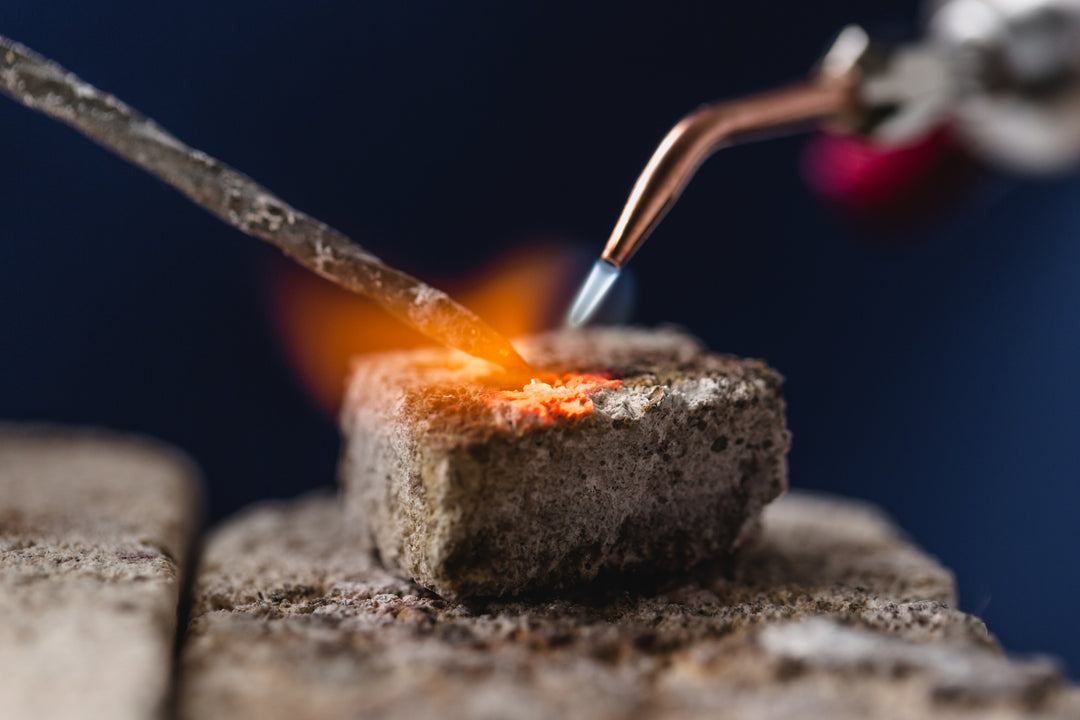
Tungsten
Tungsten carbide is the workhorse of the durable-ring category and the most common pick for construction workers, mechanics, and other heavy-handed trades. It rates 9 on the Mohs hardness scale, harder than almost anything a hand meets in a day, so the daily surface abuse that dents gold and silver shows up far less on it. It's also chemically inert, so oil, sweat, brake cleaner, and degreasers do nothing to it. Tungsten's pros and cons are covered in depth here if you want the full picture before committing.
Tungsten's weight is the main drawback: it is around twice the weight of titanium bands. Some enjoy that weight, while others want a band that feels weightless. If that's you, consider silicone, titanium, or even a 6 mm tungsten option.
Titanium
Titanium is the light heavyweight, roughly four times stronger by weight than common steels, and the standard in aerospace and surgical implants. On the finger it feels almost weightless, and a clean titanium band can be cut off with a standard jewelry ring saw for emergency removal. We compared tungsten and titanium head-to-head here: titanium wins on weight, tungsten wins on surface hardness.
Titanium scores worse points for tradespeople for its softness. Due to its 6 on the Mohs hardness scale, it scratches faster than tungsten and ceramic bands, and dark anodized finishes can brighten at areas of high contact. If you want a lightweight band, that's a fair trade to make, but if your main goal is the ring's initial appearance, tungsten or ceramic are better choices.
Ceramic
Ceramic rings are in between tungsten and titanium for weight and hardness. They are more comparable to titanium for weight, and the standout advantage ceramic has for tradespeople is that pure ceramic does not conduct electricity. Most ceramic rings are mixed with a metal core or inlays, which negates that property. If you are buying a ceramic ring for electrical trades, make sure the construction is pure ceramic with no metal banding.
Silicone
Silicone is the lifestyle ring most tradespeople wear alongside their real wedding band. It's non-conductive, non-metallic, hypoallergenic, and tears at a low force by design, exactly what you want around moving machinery, and cheap enough to keep a few in rotation. A direct tungsten vs silicone breakdown lives here. Most of the men we talk to end up owning both and switching by activity.
Gold
Gold rings should not be worn by people in most hands-on trades. Pure gold is a 2.5 on the Mohs scale, 18k sits near 2.75, and even 14k only reaches about 3.5. Gold will scratch quite easily and lose its attractiveness. Gold rings are also a danger if doing work on electrical components. Gold rings will look scratched and damaged quite easily if doing wrench work or other trades.
What Is the Best Wedding Band for Mechanics?
The best wedding band for a mechanic is a flat or low-domed tungsten band in a 6mm or 8mm width, with nothing raised on the surface to catch. Grit works its way under the band and sits in contact with the skin until it irritates, and solvents attack a softer finish until it dulls or lifts. Tools and engine components hook a raised edge and drag the ring with them. So a mechanic wants a ring that is chemically inert, smooth on the outside, and quick to get off in an emergency.
A flat band sits tight to the finger, so there is no lip for a socket or a fan blade to grab. It rules out protruding inlays and stones by default. Tungsten will shrug off brake cleaner, oil and parts wash. A tungsten band also cracks off with vise grips rather than needing to be sawn through, which matters on the day a finger is already swelling. And if you want the material without the weight of a wide band, 6mm is the easier width to live with under gloves all day.
Plenty of mechanics do not risk the good band at all. They keep the tungsten ring for off the clock and wear a silicone one in the bay, which takes the snag risk out of the working day without giving up wearing a ring. Our tungsten emergency-removal guide will show you exactly what your ER will do.
What Is the Best Wedding Band for Construction Workers?
The best type of wedding band for a construction worker is a plain tungsten band with no raised inlay and nothing set into the surface. Site work is a different problem from the bay: rebar, concrete, framing nails, gloves on and off all day, constant heavy lifting. A band there has to take impacts that would dent gold, grip pressure that would round off a softer metal, and it has to come off fast under crush trauma. A band that bends or deforms gets replaced, often more than once.
Tungsten and ceramic hold up better here than anything else in the case. Both are harder than the quartz-based dust and sand that covers most sites, so concrete grit and gritty gloves mark them far less than they mark a softer metal. Neither is harder than everything on a site. An alumina or silicon carbide grinding wheel will leave its mark on either one, and hardness does nothing about a direct impact, because both materials are brittle rather than soft. Tungsten is the one to buy for site work, because ceramic chips at the edges sooner than tungsten cracks. Ceramic earns a look only when weight is the real complaint, on ladders or long overhead days, since the same ring in ceramic weighs well under half what it weighs in tungsten.
Skip raised inlays and stones on a site band. Stone and wood inlays look good in the box, but they are the first thing to chip when a stray hammer finds them. A solid, one-piece band, matte or black tungsten, tends to look better on a work hand anyway and gives you fewer things to think about.
Best Wedding Bands for Electricians (Non-Conductive)
Electrical work is the one trade where the rule about rings is actually written down. OSHA 1910.333(c)(8) says conductive jewelry, rings included, may not be worn where it might contact exposed energized parts, unless it has been covered or wrapped so that it no longer conducts. In practice that means the metal band comes off before the panel comes open, and most electricians keep something else to wear in the meantime.
Solid ceramic and silicone are the two you can rely on not to conduct. Wood does not conduct either while it is dry, but wood takes up sweat, and a damp ring behaves very differently from the dry one you bought, so it is a poor thing to rely on. Tungsten, titanium, gold, platinum and silver all conduct, and every one of them should come off for live work. The rule governs the ring, not the hand, so a ring that does not conduct is not a reason to work closer to anything live. A dedicated breakdown of tungsten's conductivity for electrical work lives here: tungsten is a modest conductor, and the safe practice is to remove it, or swap to silicone, before any energized work.
Most electricians end up running a two-ring system: a tungsten or ceramic ring for everyday wear and a lower-profile silicone one for any work involving live circuits. Silicone tears long before a metal band would, which earns it a place in the pouch.
Best Wedding Bands for Welders and High-Heat Trades
For those in foundries and those who work with glowing and molten metal, they face a different issue: a metal ring can conduct heat, and a ring on a finger that is exposed to glowing metal can be hot enough to burn the finger and there is no way to tell until the burning is already happening. The classic injury is a circular burn that happens when the metal ring is taken off.
Ceramic and silicone are better materials for high heat trades. Ceramic doesn't conduct heat as well, so a stray flash from a stick welder is less likely to become a burn. Silicone does not melt the way a plastic does, and it stays intact well past the point where bare skin would burn, though molten metal will still destroy it. It is not protection from an arc either. CCOHS welding guidance says to work with no ring at all, so a silicone band on a welding shift is a compromise on that rule rather than compliance with it. Both tungsten and titanium conduct heat readily. A tungsten ring under a welding glove will get uncomfortably hot fast for a long shift.
If you do a lot of welding but also do a lot of other work, then the cleanest arrangement is to have a tungsten ring for everyday use and a silicone ring for welding days, covering both ends without owning three different wedding bands.
What Is Ring Avulsion, and What Is the Two-Ring System?
Before you pick a material, understand the risk a metal ring carries on a job site. Ring avulsion happens when a ring catches on a moving part, a ladder rung, or a load, and the skin and soft tissue strip off the finger as your body weight pulls away from it. It's why shops, plants, and crews often ask workers to take metal rings off entirely. A handful of men skip metal and look at a men's wedding ring tattoo for the same safety reason, though that trades one set of problems for another. A wedding band that survives the job is good. One that comes off your finger the moment it has to is better.
Most tradesmen run two rings instead of one. The metal band, usually tungsten, is the everyday ring. It's worn in the truck, at the counter, and at home. The silicone band is the safety net for the hours you're actually exposed: live panels, lathes, presses, anything spinning or that can grab. It tears away under load instead of degloving your finger, and carries no current. Our breakdown of whether tungsten conducts electricity covers exactly when an electrician should make that swap.
For the metal portion of the system, a flat, uniform band is the usual choice. Seam, our tungsten band, is made for jobsites. It's unadorned, and the material is consistent and solid, in 6mm or 8mm. If you would rather the edges were taken down, Ingot is the same one-material build with a beveled profile.
One myth worth killing: a quality tungsten ring doesn't explode off your hand under normal work. It's hard enough to crack under a sharp, focused blow, which is what lets ER staff remove it in seconds, but dropping a wrench or knocking a knuckle on a frame is not the kind of load that does it. The real story is in do tungsten rings shatter. The same property that lets a ring be cracked off in an emergency is a safety feature, not a weakness.
Ring Profile and Width Matter More Than You Think
Not all ring profiles behave the same on a work hand. Flat is the profile most trades settle on. A flat profile gives tools and ropes the least to catch on, and it slides under a glove more easily. A domed or beveled profile stands a little proud of the finger, which can give a tool or a rope more to hook, though a low bevel sits close enough that plenty of trades wear one.
Width is the other lever. Most men's wedding bands run 6mm to 8mm, our 6mm versus 8mm comparison also goes into the trade-off. For trade work, 6mm is the more conservative pick: less mass, less surface area to snag, and less heat retention if you do hot work. 8mm suits larger hands that want the visual presence. Above 8mm is almost always too much for a ring worn under gloves all shift.
Comfort-fit interiors, domed on the inside even when the outside is flat, make a real difference over a 10-hour shift, reducing the ring's contact with the finger to a thin line and easing pinch when your hand swells. The comfort-fit vs standard-fit guide covers the geometry in detail.
FoundryCut Picks for Tradespeople
This article is about the kind of ring found in The FoundryCut catalog: tungsten carbide rings in multiple profiles and widths designed to withstand the rigors of daily use. Let's take a look at three styles that our customers often use on job sites:
Monolith is a tungsten carbide ring with a matte-black finish in a beveled profile and comes in 6mm and 8mm widths. It's a bestseller for a good reason. Black tungsten hides scratches and surface markings. Beveled edges sit close to the finger, and the 6mm width suits a guy who wears gloves for a good portion of the day. If your job entails live circuits or hot work, it is wise to use a silicone ring as a backup.
In 6mm or 8mm, Ingot is a silver matte tungsten carbide ring with a beveled profile in a single tone with a brushed finish. Ingot is a plain shape in a hard material, which is most of what a job site asks for. A brushed matte finish hides scratches and marks much better than polished tungsten and that is why this style is a popular option.
For a guy who wants a flat profile, which is the one most shop hands reach for, though our profile guide makes the case for domed on a gloved hand, Rift is a flat matte tungsten band carrying two recessed channels, one stone and one wood, that run parallel without meeting. They sit below the outer face rather than standing proud of it, so the flat outer face still means nothing protrudes from the finger, and the tungsten chassis handles whatever the shift sends at it. Helm is the photogenic option: a black tungsten band with a rose-gold interior for off-shift wear, without losing the durable construction.
Common Questions About Wedding Bands for Work
What is the safest wedding ring for a mechanic?
A flat-profile tungsten band in 6mm or 8mm with no inlays is the most-recommended pick. Tungsten ignores oil, brake cleaner, and degreasers. The flat profile gives tools the least to catch on, and the ring can be cracked off with vise grips in an emergency. If you'd rather not take the chance of a real ring at all, a silicone band under the gloves is the simplest answer.
Can electricians wear tungsten wedding bands?
Tungsten conducts electricity moderately, so OSHA-compliant practice is to remove any metal ring (tungsten included) before working on energized circuits. Most electricians replace their tungsten or ceramic rings with a silicone band when opening a live panel. Pure ceramic and silicone are the two that do not conduct.
Are tungsten wedding bands good for construction workers?
Yes, the reason tungsten is the most common pick among buyers in the construction trades is that its surface hardness (9 Mohs) shrugs off the grit, concrete dust, and abrasives that gradually round off softer metals and are the reason for the rule of site work to skip raised stone or wood inlays in favor of a one material band. Inlays are the failure point in a hammer strike.
Can a tungsten ring be cut off if my finger swells?
Yes, but not in the same way gold is cut. Tungsten is too hard for a standard ring saw. ER staff use vise grips or a tungsten-specific cracker tool that fractures the ring along a stress line. The whole procedure takes seconds. The full process is covered in our tungsten emergency removal guide.
What ring should I wear for welding?
If you are going to wear anything on a welding shift, make it silicone, though the guidance from welding bodies is to wear no ring at all. If you wear metal rings at trades that involve heated metal, the rings could burn your skin under the gloves. Ceramic conducts heat far less readily than metal does, so it handles a stray flash better. Either way, the metal ring belongs at home or in your locker on welding days.
Why does my wedding ring feel tighter at the end of a shift?
Because of a combination of heat and physical exertion your fingers swell. This happens especially on longer, more tiring days, and can result in a ring being so tight that it is over one size small compared to your resting size. You can achieve a ring that fits better with a comfort-fit model, which prevents the ring from being so loose it looks bad.
Is silicone or tungsten better for everyday work?
It depends on what you mean by everyday. For office days, commuting, and most daily wear, tungsten is the better-looking long-term ring. For hands-on trade days, under gloves, around moving machinery, near live circuits, or in heat, silicone is the safer wear. Most tradespeople end up with both and switch by activity.
Do construction sites require you to remove your wedding ring?
Many do, for specific tasks. Crews working around energized equipment, rotating machinery, or heavy rigging are routinely told to remove metal rings because of ring avulsion risk. Most tradesmen land on a tungsten band for everyday wear and a silicone band for the hours they're exposed, so they're never choosing between their ring and their hand.
Is a silicone ring a real wedding band?
The uniqueness and value of a marriage don't rest upon the materials of your wedding ring. While metal rings can be dangerous in some work-related activities, a silicone ring can be a great alternative. If you work a job where a metal ring is a danger, but you want the same symbol of commitment, a metal ring can be worn as a symbol of marriage, with a silicone ring worn as a replacement. Most guys use a tungsten ring as their primary ring, and keep a silicone one for work, the gym, or water recreation. Either way, they represent the same commitment.
Whatever trade you work in, the right wedding band survives the day, comes off when it has to, and looks good with the gloves off. Tungsten is the workhorse, silicone is the safety net, and the right pairing covers almost every situation. Firefighters face that same snag risk plus serious heat and electrical exposure, covered in our guide to the best wedding bands for firefighters. Browse the full FoundryCut men's wedding band collection, or jump straight to the black tungsten rings if matte black is already your finish.


