
A platinum men's wedding band costs several times what most alternative metals cost, and almost none of that gap is markup. You're buying a dense precious metal priced by the gram, plus the bench time it takes to work a metal that fights back. Once you know how those two things stack, the price on the tag stops looking arbitrary and starts looking like arithmetic you can check.
In this particular section, we outline what a purity stamp actually means, what contributes to the price the most, how a wedding band's width contributes to added costs, and purchasing decisions that are often overlooked at the counter. If you're choosing between metals rather than shopping for platinum, our platinum vs tungsten comparison is probably a better start.
What Does the Stamp Inside the Band Mean?
Look inside a platinum band and you'll find a number. In the US market it's usually 950, which means 95% platinum and 5% of a companion metal such as ruthenium, iridium or cobalt added for working strength. You'll also see 900 and 850 on imported or older pieces, and those are exactly what they sound like.
The companion metal matters more than the five percent suggests. Ruthenium alloys are harder and hold a better edge. Cobalt alloys cast more cleanly and take a brighter polish, which is why they are present in machine-made bands. Iridium is softer than both and is the traditional choice. A jeweler who can tell you which one is in the ring is a jeweler worth buying from. Likewise, a jeweler who can't tell you which one is in the ring is not a jeweler worth buying from, because they are guessing about a ring you'll wear for decades.
Platinum reads white without help, and this is another reason for purity. White gold is yellow gold that's been bleached with alloy, and it finishes with a rhodium coating that wears down over a year or two, meaning it requires maintenance. All platinum jewelry is white all the way through, meaning no plating, so there's nothing to maintain. If that is what brought you here, the white gold buyer's guide covers the replating cycle in detail.
What Are You Actually Paying For in a Platinum Men's Wedding Band?
Three things stack, and they stack in this order.
First, the metal itself, which is priced by weight and whatever platinum is trading at. Platinum runs at 21.45 g/cm³, denser than gold at 19.30 and well past tungsten carbide at 14.5 to 15.0. Same ring, same dimensions, and the platinum version simply contains more grams of expensive material. Our ring weight comparison runs the density numbers across all common metals if you want the full spread.
Second, the bench work, which we'll get to below and which is a real cost and not a padded line item.
Third, whatever the retailer adds. This variation is huge between a mall chain and an independent bench jeweler, and this is the only part of the three you can actually negotiate.
Notice what's not in that list. There is no rarity premium in the spot price, no certification cost like the cost of a stone, and no real brand engineering of a plain band. Two 950 platinum bands that are the same width, profile and weight are essentially the exact same object, no matter what is on the box.
Width Changes the Price of a Platinum Wedding Band More Than Anything Else
This is the part most buyers fail to recognize. Ring metal is priced by mass, and mass is dictated by width, so a band that is twice as wide is a band that holds approximately twice the amount of metal. For the same reason, the difference between a 6mm band and an 8mm band in width is a big enough difference that it makes a noticeable difference on the price in platinum compared to the price difference in other ring metals.
Here is how the mass runs across common men's widths, using a size 10 band with a typical men's wall thickness. These numbers are approximate because each ring's profile and thickness will move the numbers.
| Width | Platinum mass, size 10 | Metal cost vs 4mm | How it reads on the hand |
|---|---|---|---|
| 4mm | ~10 g | baseline | Understated, reads as a dress band |
| 5mm | ~13 g | about 1.25x | The quiet default for slim hands |
| 6mm | ~16 g | about 1.5x | Balanced, the usual step-down from 8mm |
| 7mm | ~18 g | about 1.75x | Substantial without shouting |
| 8mm | ~21 g | about 2x | Bold, and heavy enough to notice all day |
Twenty-one grams of platinum on your hand is a lot of ring. That weight is the single most common complaint from men who buy wide platinum without wearing it first, and it's why 6mm is the usual step-down from the 8mm default. Our width guide walks through how to judge the difference against your own hand rather than against a photo.
Profile shifts change the mass distribution. A domed band carries more metal per millimeter of width than a flat band. This is because the cross section is thicker through the middle. Thus, a domed 6mm band can weigh close to a flat 7mm band. The profile guide has the shapes side by side.
Why Does the Labor Cost More Than It Does in Gold?
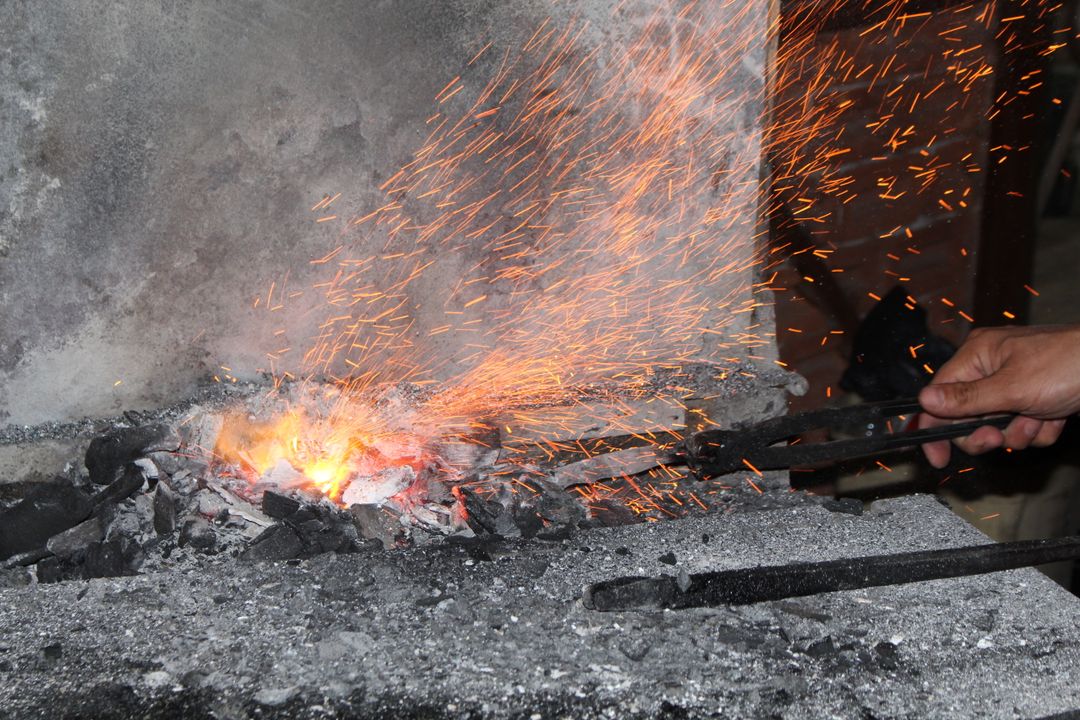
The "surprising" part of platinum is that it is gummy to work with. It does not cut cleanly, it drags on files, drags on burs, and it work-hardens. A bench jeweler finishing a platinum band goes through consumables faster and spends longer on the same operation. This is because platinum melts and welds at higher temperatures, which calls for dedicated equipment. Because of this, most shops use separate tools to avoid gold particle contamination.
The genuine cost of finishing a platinum band instead of a gold band is the reason finishing cheap platinum bands is often the tell. A good light reveals the interior of the shank. A rushed platinum band shows fine tool drag and a slightly cloudy polish where the jeweler ran out of patience. A good band is even all the way around including the part that is not seen.
The Patina Decision
Platinum sits right around a 4 to 4.5 on the Mohs hardness scale, in the same soft band as ring gold alloys at roughly 2.75 to 4, which is again much softer than the ceramic-class metals. This results in platinum bands showing fine surface marks and a soft gray sheen that is referred to as patina.
The physics behind it are worth understanding, because platinum behaves differently from gold when it gets marked. Gold sheds metal when it abrades. Platinum mostly displaces it, pushing metal sideways rather than losing it, which is why an old platinum band can be polished bright again and again without thinning much. A lot of men come to prefer the worn finish and never polish it at all. Others want the ring to read the same at twenty years as it did on the day, and for them the answer is a scheduled polish rather than a different metal.
A polished ring looks the best and smoothest when it is new. However, the polished finish draws attention to scratches and looks the worst after a year. A brushed or matte finish disguises scratches much better and ages more gracefully. This logic is what inspired the different finishes on our men's wedding bands.
Sizing, Resizing and Refinishing
Platinum resizes, and that's a real advantage over the harder alternatives, and it's the argument that most often wins the metal decision for men whose hands change with weight, work or age. A bench jeweler can go up or down a size or two without much drama, though the higher working temperature means some shops charge more for platinum than for gold on the same job.
Get your size right the first time. Comfort-fit or patterned bands are trickier to resize than plain bands. Additionally, resizing a band costs a little bit of the original finish and costs a little bit of the band itself. Use the men's ring size chart and at-home measuring method instead of relying on a piece of string.
If you want the polish maintained, refinishing is a small recurring cost for as long as you own the ring, and over thirty years it adds up to real money worth factoring in against the purchase price. Harder metals sidestep the question entirely but cannot be resized, and that's the trade-off the tungsten resizing guide lays out.
How Do You Check You're Not Overpaying?
For something plain, a ring seller of a band should be giving you the weight. If they will not give you a number in grams for a plain band, that is a huge red flag. Since the weight and the purity factor into the ring's worth, they should be giving you the answers. With these two answers and the current spot price, you can determine the worth of the metal in the ring. You can then assess whether the price of the craftsmanship is worth it.
Here are a few other elements that define a good price versus a bad price:
- The purity stamp is present and legible, and the seller can name the alloy.
- The quoted price includes at least one sizing, which most independent benches offer and most chains don't.
- The return window is long enough to actually wear the ring for a few days at home.
- Nothing in the description implies platinum resists marking, because it doesn't, and a seller who claims otherwise is either uninformed or hoping you are.
That last point probably catches more bad listings than anything else. Platinum is white without plating, hypoallergenic for most wearers, resizable, and repolishable. Marking resistance was never on that list, and any listing that puts it there is describing a different metal.
Who a Platinum Men's Wedding Band Is Right For
Platinum makes sense if you want a precious metal with no plating to maintain, you expect your ring size to move over the years, you have a sensitive reaction to alloyed metals, and the budget is there without straining. It's a good ring for a man who works at a desk and wants something that will still be repairable in forty years.
Platinum rings make less sense for a guy who works with his hands a lot, wants the ring to keep looking new, or has the budget competing with something he would rather spend on. In both of those cases a hard metal does the job at a fraction of the outlay. A plain silver-tone band like Ingot gives you the same clean profile at a very different price, and Monolith covers it in black matte for men who never wanted white metal in the first place. Both sit in the wider tungsten rings range, and the tungsten price guide shows where that market actually sits.
You should only buy platinum from a merchant who is willing to talk to you about the band's gram weight, the alloy composition, and their resizing policy. This conversation will help you learn facts about a ring that no display case will ever reveal to you.
Common Questions About Platinum Men's Wedding Bands
How much does a platinum men's wedding band weigh?
A size 10 platinum band runs roughly 10 grams at 4mm and around 21 grams at 8mm. The thickness of the profile and band walls can increase or decrease that weight. Platinum's density is 21.45 g/cm³, higher than gold's density of 19.30 and tungsten carbide's density of 14.5 to 15.0. As platinum's density is greatest of the three, the same ring made in platinum will weigh the most.
What does the 950 stamp mean on a platinum ring?
The ring is 95% platinum, and the other 5% is a metal alloy added to improve its workability, like ruthenium, iridium, or cobalt. Rings are stamped "900" and "850" to denote 90% and 85% platinum. Ask the merchant which alloy is used. Ruthenium will be harder and cobalt will have the brightest polish.
Why is a platinum wedding band so much more expensive?
Three separate costs stack up here. Platinum trades at a high price per gram, you need more grams than you would in gold because it's denser, and it takes longer to work at the bench because it's gummy and needs dedicated tooling. Retail markup sits on top of all three, and it's the only part of the price you can negotiate.
Does a platinum ring scratch?
Yes. Platinum sits around 4 to 4.5 on the Mohs scale. This is one of the reasons why platinum can easily develop scratches and surface marks and develops a gray color over time. Unlike gold, platinum does not shed metal when marked. It displaces it, pushing it sideways rather than losing it, which is why a jeweler can polish the band repeatedly without thinning it.
Can a platinum wedding band be resized?
Yes, it can be sized. This is an advantage platinum has over other metals. Although a jeweler can size platinum a couple of sizes up or down, the metal itself has a higher working temperature than gold, which can make repair costs more expensive. Depending on the design of a ring, they may be easier or harder to resize.
Is platinum or tungsten better for a men's wedding ring?
Neither metal is inherently better than the other. Platinum is a metal you can resize and repolish that also does not contain plating, unlike the other metal. Tungsten carbide is cheaper but also does not allow for resizing. In terms of preservation and cost, Tungsten is the better option, but for repairability, platinum is better.
If you want to compare options before making a commitment, check out the entire collection of men's wedding bands. Compare different widths and styles of wedding bands in a metal that retains its finish. Or check out the three-metal guide.


