
A men's ring size chart matches US ring sizes with actual measurements of the inside diameter (mm) of the ring and the inside circumference (mm) of the ring. Interpreting this chart properly allows you to purchase a ring online, makes confident conversions from US sizes to UK or EU sizes, and check the accuracy of a size that the jeweler provided. If this chart is read wrongly, you will receive a ring that is loose, or that you cannot get past your knuckle.
The complete men's ring size chart, US/UK/EU conversions, what the average sizes are, the few places the chart mildly misrepresents the facts, and the numbers will all be provided in this guide.
How do you read a men's ring size chart?
Every men's ring size chart is based on the simple fact that all a US ring size is, is a label to describe an inside diameter. Size 10, the most average/most sold size for men, shows that the ring has an inside diameter of roughly 19.8mm. The chart provides sizes that you can measure from home using a string and a ruler, or compare with a ring you already own.
There are two measurements that people often get confused about:
Inside diameter measures how far it is across the inside of the ring. You get this by laying the ring flat and measuring edge to edge. Inside circumference measures the distance around the inside of the ring. Circumference is measured by stringing around your finger and marking where the string overlaps. When measuring diameter, it is the same principle when measuring a ring you already have. Below is a circumference and diameter comparison chart that describes your measurement options.
One rule before you go further: measure your finger late in the day when it is at its warmest and largest, not first thing in the morning. Fingers swell and shrink through the day, and the difference is often a full half size.
Men's ring size chart: US sizes, mm, and circumference
Find your ring size using the diameter or circumference measurement in millimeters. Length measurement corresponds to US sizes. Most men's ring sizes nestle between 8 and 12, and these are the most common sizes. Standard sizes for men's rings based in the US are listed below.
| US ring size | Inside diameter (mm) | Inside circumference (mm) |
|---|---|---|
| 6 | 16.5 | 51.9 |
| 6.5 | 16.9 | 53.1 |
| 7 | 17.3 | 54.4 |
| 7.5 | 17.7 | 55.7 |
| 8 | 18.1 | 57.0 |
| 8.5 | 18.5 | 58.2 |
| 9 | 19.0 | 59.5 |
| 9.5 | 19.4 | 60.8 |
| 10 | 19.8 | 62.1 |
| 10.5 | 20.2 | 63.3 |
| 11 | 20.6 | 64.6 |
| 11.5 | 21.0 | 65.9 |
| 12 | 21.4 | 67.2 |
| 12.5 | 21.8 | 68.5 |
| 13 | 22.2 | 69.7 |
| 13.5 | 22.6 | 71.0 |
| 14 | 23.0 | 72.3 |
If your measurement falls between two rows, round up rather than down. A band that is a hair loose can be sized with a fit insert, but one that will not clear your knuckle is useless. This matters more with tungsten, which cannot be stretched or shrunk the way gold can. If you want the full reasoning on that, read our guide on whether you can resize a tungsten ring before you commit to a number.
How do US ring sizes convert to UK and EU sizes?
The US measures using numbers, while the UK and Ireland use letters. Much of Europe uses the inner circumference of the ring in millimeters as the band size. This conversion chart can get you from one measurement system to another if you are buying from an overseas maker.
| US size | UK / Ireland | EU size | Diameter (mm) |
|---|---|---|---|
| 7 | N½ | 54 | 17.3 |
| 8 | P½ | 57 | 18.1 |
| 9 | R½ | 60 | 19.0 |
| 10 | T½ | 62 | 19.8 |
| 11 | V½ | 65 | 20.6 |
| 12 | Y | 67 | 21.4 |
| 13 | Z½ | 70 | 22.2 |
UK letter sizes fall on roughly two letters per US size, which is why most fall on half letters. When a conversion lands between two values, size up. The EU number is simply the circumference rounded to the nearest millimeter, so it doubles as a quick gut check against the main chart above.
What is the most common men's ring size?
In the US, the average men's ring size is between 9 and 10 (10 being the most common size) which is an inner diameter of just under 20 millimeters. Slim hands land one between 8 and 8.5, while larger hands fall between 11 and 12. Sizes below 7 or above 13 are on the rare side for men.
Understanding your position within that range is helpful, mainly because it indicates how likely your assumptions about 'normal' sizing would be reasonable, and often they will not be. We pulled the actual distribution in our breakdown of the average men's ring size and what the data says, and the spread is wider than most people guess. If you're sizing for someone else and only have your own size to go on, that gap matters even more, which we address in Are Men's and Women's Ring Sizes the Same?
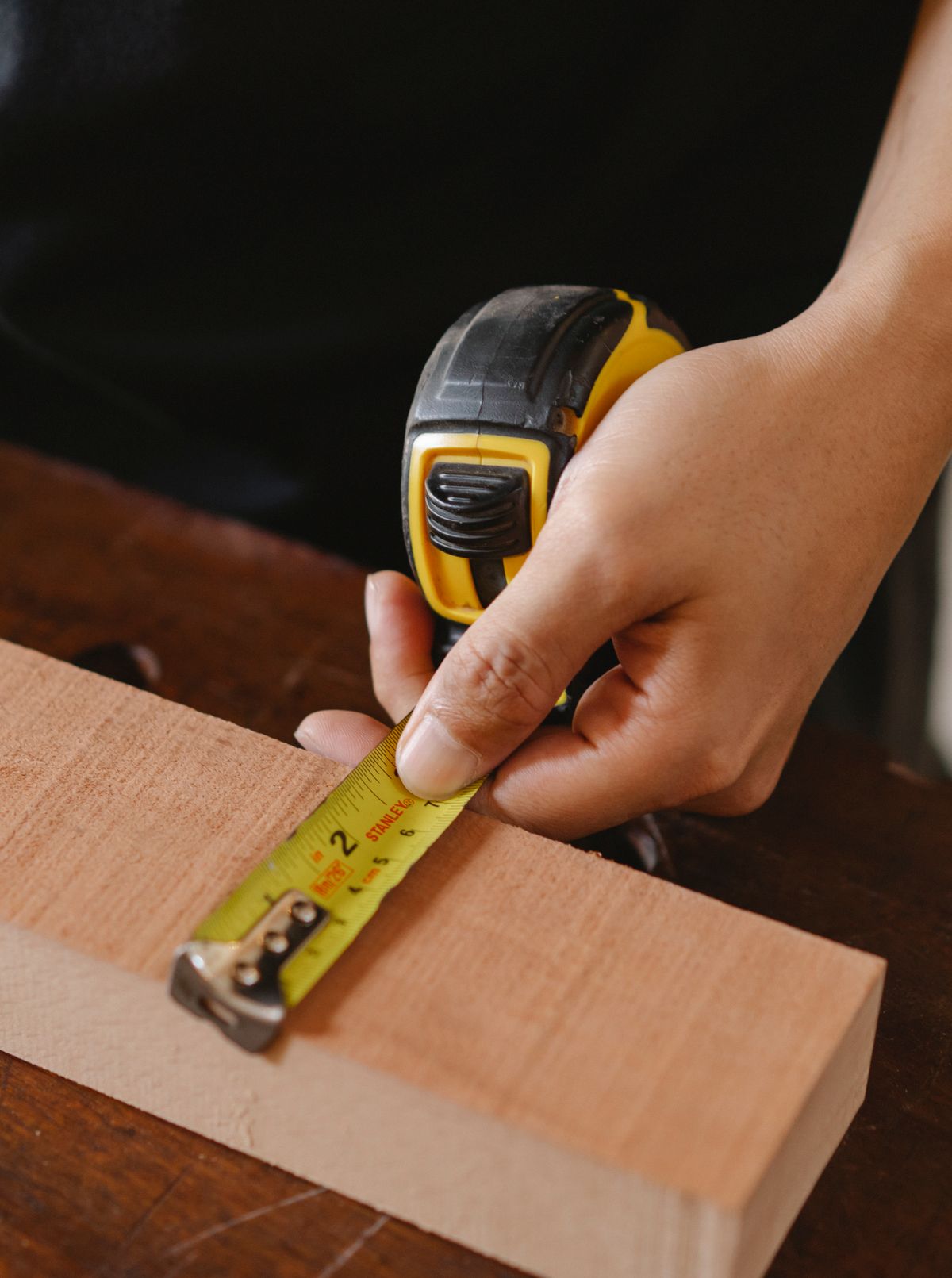
Measure before you trust the chart
A chart is only as good as the measurement you bring to it. The two reliable ways to get your number are measuring a ring that already fits, or measuring the finger itself. Measuring an existing ring is the most accurate: lay it flat, measure the inside diameter in millimeters, and match it to the diameter column above.
If you do not have a ring to measure, wrap a strip of paper or string around the base of your finger, mark where it overlaps, and measure that length in millimeters against the circumference column. Do it three times and take the largest reading. For the full method, including the mistakes that throw the number off, follow our step-by-step on how to measure men's ring size at home, or use the printable tool on our find my ring size page.
One more thing the chart cannot show you: how a ring should really feel when it is on. It should clear the knuckle with a little push and should not spin freely. For more in-depth information on how a ring should fit, check out our guide.
Does ring width change the size you need?
A wide band covers more of your finger and therefore feels tighter than a narrow band of the same size, which is the part that the standard men's ring size chart does not address. It may seem counterintuitive, but if you sized yourself with a narrow band or a thin size guide, and then purchase an 8mm band, that band can feel a half size too small.
The rule of thumb: if you go wider than about 6mm, think about sizing up a quarter to a half size, especially if your knuckle is larger than your finger. Ingot at 8mm sits differently than a 6mm profile, and our bestselling Monolith comes in both 6mm and 8mm specifically to accommodate the width against your hand. We break the trade-off down fully in 6mm vs 8mm ring width.
Comfort-fit bands, which are slightly domed on the inside, also feel about a quarter size larger than flat bands. If you are between sizes with a comfort-fit ring, size down. When in doubt, check out the collection of men's wedding bands and see the width of your preferred styles to help you with sizing.
Common questions about men's ring sizes
What is the most common men's ring size?
For men, a Size 10 is the most common ring size in the US, with sizes 9 to 11 also being the most common. Size 10 is just under 20mm in internal diameter. Since hand sizes differ, you should always measure instead of relying on standard sizes.
How do I convert mm to a US ring size?
To find your ring size, measure the inside diameter of a ring. Match your measurement to the diameter in the chart. If a ring has a diameter of 18.1mm, you would be a US size 8. If the ring has a diameter of 19.8mm, you would be a size 10. If you measured circumference instead, match your measurement to the circumference column in the chart. If you're in between two sizes, always round up.
Are men's and women's ring sizes on the same chart?
Yes, ring sizes use one scale regardless of gender, so the same chart applies to everyone. Men simply tend to fall higher on it, usually three to four sizes above the typical women's range, because their fingers are larger.
Should I size up for a wide band?
Since a wide band covers more of your finger, it will also feel tighter than a narrow band of the same size. If you are going wider than about 6mm, you should also go up a quarter or half size, especially if your knuckle is larger than the base of your finger.
What if I am between two ring sizes?
Always round up your size to avoid your ring getting stuck on your knuckle. Using a fit insert can fix a ring that's a bit too loose, but if the ring gets stuck on your knuckle, then the ring is unwearable. This is especially important with tungsten, as it cannot be resized. It's always better to choose a larger size when picking a tungsten ring.
Does the time of day affect my ring size?
Yes, fingers swell with heat and activity and shrink when you are cold or just waking up, often by a full half size across a day. Measure late in the day when your hands are warm, and never size yourself first thing in the morning.
After finding your number, choose a band to fit your hand and life. When sizing, match the width, round up when you're between sizes, and look through the full range of men's wedding bands.


