
A damascus steel ring is one of the best-looking bands a man can wear. The rippling, watery pattern is unlike anything else on the market, and no two rings are exactly alike. But that beauty comes with a catch most sellers gloss over: real damascus steel can rust, and it needs regular care to keep its pattern sharp. Tungsten carbide asks for none of that.
We're going to analyze Damascus steel rings and tungsten carbide rings in their day to day functionalities. We're going to touch on aesthetics, strength, upkeep, resizing options, ease of removal for emergencies, and cost. Since FoundryCut makes tungsten carbide rings, we're going to give you our honest analysis of both options and not one-sided opinions.
What is a damascus steel ring?
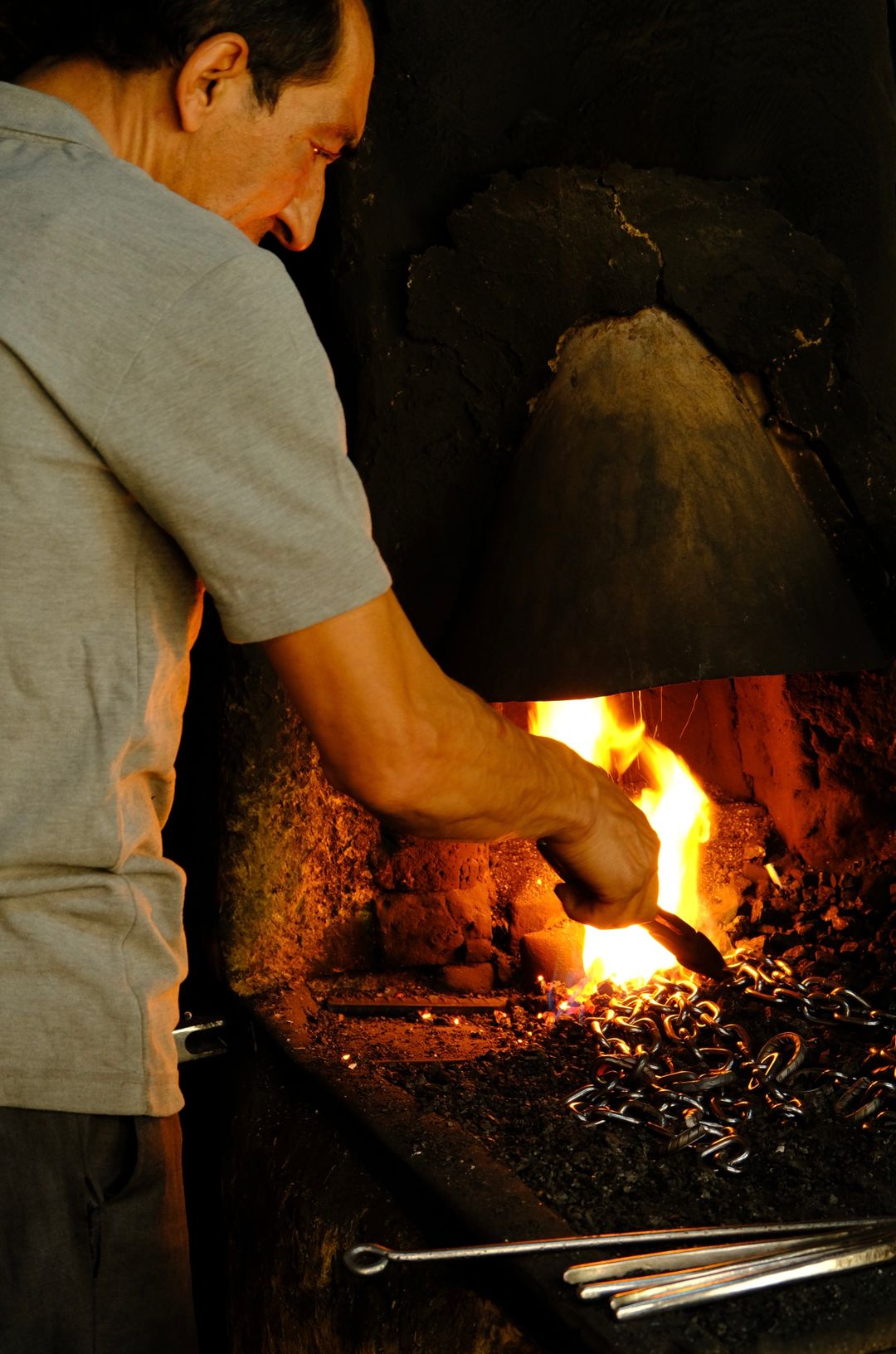
Damascus steel wedding bands pair different steels that are forge-welded together, layered, and etched in a way to expose the layers and create flowing patterns. In modern times, what we refer to as "Damascus steel" is actually pattern-welded steel. In this process, a smith stacks steel so that different types are in alternating layers. The same stacking approach in non-ferrous metals produces a mokume gane ring. Once a billet is fused, the smith twists and hammers the billet to control the line swirls. The last step is to conduct an acid etch, revealing the pattern.
The end result is a one of a kind wedding band. The pattern is physically a part of the steel and not applied on the outside of the ring, giving it a unique look that draws interest. That's the draw of a Damascus wedding band. The grain tells you it was forged rather than stamped.
To be honest, there are some downsides to these steels. Most damascus rings use high-carbon tool steels. These are steel rings that will tarnish. Some makers use a special coat or treatment to slow down how fast a steel damascus ring will tarnish, but without that, the ring is steel and behaves like steel.
What is a tungsten carbide ring?
Tungsten carbide rings are made from tungsten combined with a special carbon that forms a bond with tungsten and creates an extremely hard ceramic-metal compound. It is then finished with either nickel or cobalt. Tungsten jewelry is quite the opposite. Tungsten jewelry is favored for staying exactly the way it left the workshop. Because tungsten does not oxidize under normal wear, it will never rust or tarnish, and it is extremely durable against use that would mark softer metals.
Tungsten rates 9 Mohs, right behind the hardness of a diamond and a sapphire. This is a good reason as to why a tungsten ring will retain either a polished or matte appearance for a very long time of use. If you want the full material breakdown, read our guide to what tungsten carbide actually is.
The trade-off runs the other way. Tungsten is uniform by design, so you won't get the organic, layered grain of damascus, and because it's hard rather than malleable, it can't be resized. For most guys that's a fair swap, but it's worth knowing before you buy.
Damascus steel ring vs tungsten: spec comparison
This discussion will compare Damascus Steel and Tungsten Carbide rings and show how the specs of each ring truly reveal how the ring will wear over time.
| Factor | Damascus steel | Tungsten carbide |
|---|---|---|
| Composition | Layered high-carbon steels, forge-welded and etched | Tungsten and carbon with a metal binder |
| Hardness (Mohs) | Around 6 to 7, depending on the steels used | Around 9, close to sapphire |
| Look | Flowing organic pattern, one of a kind | Uniform, consistent, black or silver tones |
| Rust and corrosion | Can rust if left wet or unoiled | Does not rust or tarnish |
| Maintenance | Periodic oiling to protect the pattern | Wipe clean, no routine upkeep |
| Resizing | Sometimes, by a specialist smith | No, replace by size instead |
| Emergency removal | Cut with standard ring-cutting tools | Cracked off with vise-grip pressure |
| Typical price | Wide range, often higher for hand-forged | Consistent, mid-range and honest |
The look: pattern vs uniform finish
Damascus wins outright here, and there's no point pretending otherwise. A damascus steel ring has depth: the pattern shifts as light moves across it, and because each billet is forged by hand, your ring isn't identical to anyone else's. If your priority is a band that looks forged, characterful, and unmistakably not mass-produced, damascus delivers something tungsten can't copy.
Tungsten rings are very sharp and can maintain a clean surface finish in a variety of settings, including a matte black or a bright silver. Tungsten rings lack grain, but do maintain a consistent crisp look. If you like the idea of forged texture without the steel, a hammered or faceted tungsten band gets you close. Our guide to hammered tungsten rings walks through the textured options, and bands like Forge lean into that rugged, worked-metal look.
Durability and hardness
Hardness and toughness serve different functions, and both have roles in metalworking. Damascus steel is tough in the sense that it can absorb a lot of impact and even flex under pressure without breaking or cracking, which is partly why it's been used for blades for such a long time. However, it's not hard at the surface. On the Mohs hardness scale, it scores around a 6 or 7, which is relatively low and can lead to scratches from contact with items like keys. It can even lose the etched design of the ring if it is worn every day and not maintained.
Tungsten is the opposite of Damascus steel. On the Mohs hardness scale, it scores a 9, which means it can withstand abrasions that would mark steel, which is why it can hold a polish. The problem, however, is that it is hard rather than flexible. This means that, unlike tungsten, steel can bend and absorb an impact without cracking. This can mean a bent steel band can trap a finger, which is why we provide a guide on whether or not tungsten rings shatter. For certain types of work, rings that can crack off safely are a better choice than a steel band that bends and traps a finger.
Weight is worth its own mention, because it changes how the ring feels all day. Tungsten is dense, so a tungsten band carries a real heft that a lot of guys read as quality and reassurance on the finger. Damascus steel is noticeably lighter and sits closer to an ordinary steel band, which some men prefer and others find a little slight for a wedding ring, though neither is right or wrong. If you've worn a heavier ring before and liked the presence of it, tungsten leans that way, while damascus keeps things low-key.
Rust, care and everyday maintenance
This is the deciding factor for a lot of guys, and it's the one damascus sellers tend to underplay. A damascus steel ring is still steel, so it can rust if it stays wet, sits in a gym bag, or gets handled with sweaty hands and never dried. Owners are generally advised to keep it dry, wipe it after contact with water, and apply a light coat of oil or wax now and then to protect the etched pattern. Skip that and the surface can dull or spot.
Tungsten also needs nothing, basically. It doesn't oxidize, so it won't rust or tarnish, and a wipe with a soft cloth is its entire maintenance. If you want the specifics, our post on whether tungsten tarnishes lays it out. If you want a ring you can wear every day without thinking about it, that difference is the whole argument.
Price and long-term value
Pricing for Damascus steel varies. Genuine hand-forged Damascus rings can command a premium price and come with a higher cost. Damascus rings can cost less, and some rings can just be imitations with a laser-etched pattern steel. Part of buying Damascus is knowing what you are getting and paying for what you buy.
Tungsten is more consistently and equitably priced. FoundryCut rings are nickel-bonded tungsten carbide and are priced fairly. With tungsten carbide, you get a material that lasts, plus a finish that lasts. To see what honest pricing looks like across all styles, peruse the full range of men's wedding bands. If you prefer a simpler look, start with Ingot ring, one of the classic styles.
Which ring should you choose?
Pick damascus if the pattern is the point. If you want a forged, characterful band that no one else has and you're happy to keep it dry and oil it now and then, a damascus steel ring rewards that care with a look nothing else matches. It suits the guy who treats the ring as an object with a story, not just a daily driver.
Choose tungsten if you want a worry-free ring. For a damascus wedding band alternative that never rusts, maintains its finish, and keeps its price the same every year, tungsten is a great choice. If you want a rugged, crafted-metal style, Monolith offers a textured black band or a hammered finish, and gives you the desired style with less maintenance. For a more detailed comparison, look at our carbon fiber vs tungsten guide or our hammered rings, which are the closest rings to forged steel you will find.
Common questions about damascus steel rings
Do damascus steel rings rust?
Yes, and damascus is made from high-carbon steels, and if the ring is left wet or handled with sweaty hands and not dried, it will rust. Keeping it dry and applying a light oil or wax every so often helps, but not completely. Tungsten, on the other hand, never rusts.
Is damascus steel good for a ring?
Yes, if you want a more striking one of a kind pattern, and you will put in the effort to maintain it. Damascus looks amazing and is very comfortable, but does need a bit of upkeep to stay rust free and keep the etched grain sharp. If maintenance is a bigger factor than the design, tungsten is the better alternative.
Is damascus steel stronger than tungsten?
They are both strong in different ways. Damascus is tougher since it flexes when it bends and doesn't break, and that is why it has been used to make blades for a long time. Tungsten is much harder, around 9 on the Mohs scale, so it holds its finish and resists marks. Neither is stronger all the way around.
Are all damascus steel rings real damascus?
Some Damascus rings are plain steel rings with a pattern printed or laser-etched on them. Legitimate Damascus rings are actually forged with pattern-welded steel, the pattern going all the way through the metal. Before paying a huge price, ask the seller how the ring is made.
Can a damascus steel ring be resized?
Sometimes, yes. A specialist may be able to resize. However, it is risky and may disturb the etched pattern. Tungsten, however, cannot be resized and is replaced with a new ring of the same size. Both metals require an accurate size before they are made, and we include sizing guides on our website.
Is tungsten or damascus better for a wedding band?
It depends on what you want from the ring. A damascus wedding band is the choice for a forged, characterful pattern you are proud to maintain. A tungsten wedding band is the choice for a band that never rusts, holds its finish, and needs no upkeep. Both are strong, comfortable everyday options.
A damascus steel ring gives you a pattern and a story nothing else can match, at the cost of ongoing care and the risk of rust. Tungsten gives you a finish that lasts and a ring you never have to think about. If low maintenance and steady value win for you, browse FoundryCut's men's wedding bands and find the profile that fits your hand.


