
Ten years ago, a man buying a wedding band almost always meant gold. That default is breaking down, and more men are choosing tungsten over gold instead. It isn't a fringe choice anymore: entire ring lines, including FoundryCut's, are built around nothing else. The reasons aren't complicated once you line them up. Tungsten costs a fraction of what gold costs, holds up to daily wear that leaves a gold band looking tired inside a year, and comes in finishes a plain gold band never offered in the first place. None of that makes gold the wrong choice. It means the calculation changed, and more men are running the numbers for themselves instead of just buying what their father wore.
Why is tungsten so much cheaper than a gold wedding band?
Tungsten runs $150 to $190 for a finished ring, and a 14k gold band typically runs $1,200 to $2,800 for the same job. The gap comes down to what's actually being priced. Gold is a precious metal with its own commodity value baked into every gram, which our breakdown of what a 14k gold band actually gets you covers in full, while tungsten carbide is an industrial compound priced on manufacturing rather than raw material scarcity. That gap doesn't close once you own the ring either. Our full breakdown of what each metal costs over ten years walks through resizing, refinishing, and insurance on top of the purchase price, and the gap only widens once those get counted. For a lot of guys, what used to go toward the band now goes toward the stone on the other hand, or stays in the budget for the honeymoon.
How much harder is tungsten than gold, in practice?
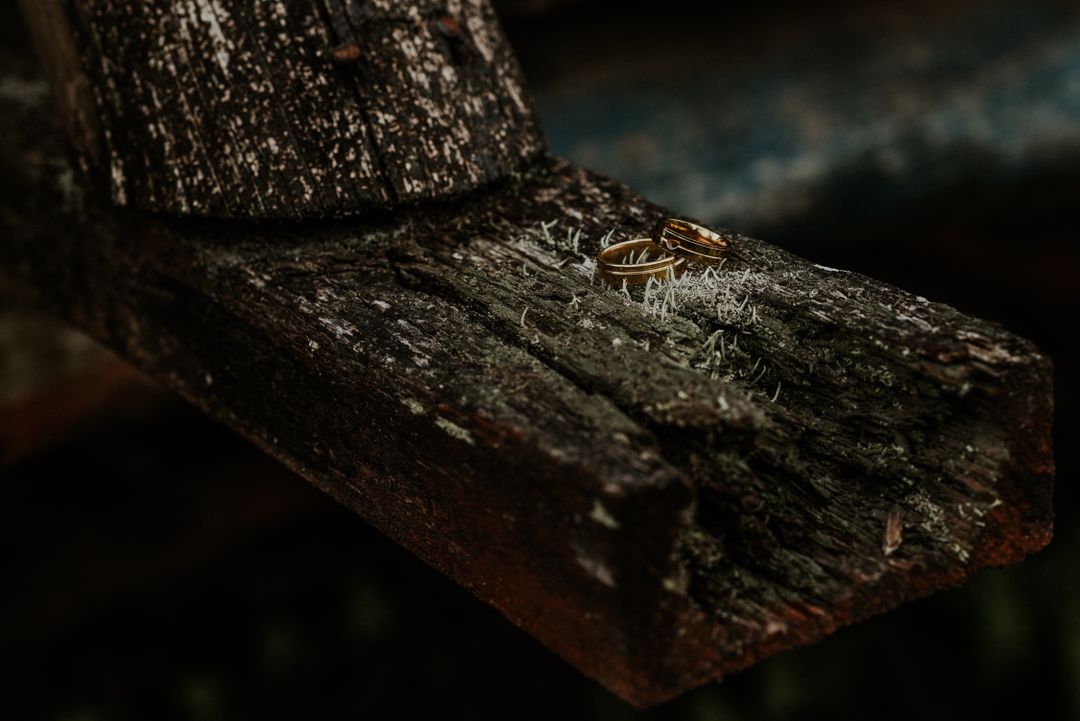
Tungsten carbide rates about 9 on the Mohs hardness scale, while a 14k gold band sits around 3.5, so tungsten takes several times the force to mark that gold does. That difference shows up fastest on a work site or at the gym, where a gold band picks up dents, scuffs, and bent edges faster than most guys expect from a ring they plan to wear every single day. A tungsten band's surface holds up against those same daily bumps, which is the biggest reason guys who work with their hands make the switch. Weight plays a part too. Tungsten carbide sits noticeably heavier on the hand than gold at the same dimensions, and a lot of men read that heft as the ring actually being there rather than feeling like it isn't.
Why are tradesmen and gym-goers switching to tungsten?
Tradesmen, mechanics, and anyone who works with their hands for a living tend to land on tungsten because it holds up to a shop floor the way a soft gold band never will. Our guide to wedding bands for mechanics and construction workers goes deep on the trade-specific picks, but the short version is that tungsten carbide's hardness and weight make it the band of choice on a lot of job sites, with one real exception: it conducts electricity, so it's the wrong call for anyone working near live current. Our honest look at tungsten ring safety covers that trade-off and one other thing worth knowing, which is that tungsten carbide is hard and brittle rather than soft and bendable, so an ER team removes one by cracking it rather than cutting it the way they would a gold band. That's a feature for anyone worried about a ring that won't come off in an emergency.
Does tungsten offer more color and finish options than gold?
Yes, by a wide margin. A plain gold band comes in yellow, white, or rose, and that's the full range before plating gets involved. A FoundryCut lineup alone runs through black matte, silver matte, and gold-tone finishes, with inlays in blue, rose gold, antler, and stone that a traditional gold band was never built to carry. Monolith is the black matte bestseller for guys who want the opposite of a traditional yellow band, and Halcyon pairs a gold-tone matte finish with a blue interior for something closer to gold without actually being gold. Browse the full tungsten ring collection to see the range side by side.
Is this shift just about price, or has the culture changed too?
Price explains a lot of it, but it doesn't explain all of it. Ten years ago, plenty of guys who could have afforded a cheaper, sturdier ring still bought gold because that's what a wedding band was supposed to be, but that assumption has loosened. Grooms pick their own rings more often now instead of inheriting whatever style their father or father-in-law wore, and a wider range of finishes and metals reads as a normal choice rather than a statement. The same shift shows up in how couples split a wedding budget. More of it tends to go toward the engagement ring and the ceremony itself, and less gets automatically set aside for a groom's band that used to be gold by default. Tungsten fits that math, since it does the job of a wedding band without asking for a meaningful share of the budget.
What does gold still do better than tungsten?
Gold keeps a resale and scrap value that tungsten carbide never had. Gold is a commodity metal with a quoted market price, while tungsten carbide is an industrial compound with none. Our honest look at what a tungsten ring is actually worth covers why an appraisal rarely makes sense at tungsten's price point, and the flip side of that is gold holding value tungsten simply doesn't. Gold can also be resized the traditional way, cut, stretched, or soldered by a jeweler, where a tungsten band has to be exchanged for a new size instead. Our guide to tungsten resizing covers that limitation in full, including how most retailers, FoundryCut included, build an exchange window into the purchase to cover it. For guys with a strong attachment to family tradition, a gold band passed down or intended to be passed down still carries a meaning tungsten can't replicate, since tungsten carbide wasn't a wedding-band material a generation or two ago.
What does tungsten vs gold look like side by side?
The numbers tell the story faster than any paragraph can.
| Category | Tungsten band | 14k gold band |
|---|---|---|
| Purchase price | $150 to $190 | $1,200 to $2,800 |
| Mohs hardness | About 9 | About 3.5 |
| Daily wear | Holds up to shop and gym use | Dents and scuffs faster under the same use |
| Resizing | Exchanged for a new size, not resized | Cut and resoldered by a jeweler |
| Color and finish options | Black, silver, and gold-tone, plus blue, rose gold, antler, and stone inlays | Yellow, white, or rose, before plating |
| Resale and scrap value | None, not a commodity metal | Holds quoted market value as a precious metal |
Neither column is the wrong answer. It comes down to which trade-offs you'd rather live with for the next several decades.
So which guy should still choose gold?
Gold still makes sense for a guy who wants inherited or resale value, expects to resize the traditional way as his hand changes, or wants the same metal his father wore. For everyone else, the math in this guide points the other way. If tungsten fits what you're reading here, Ingot is the cleanest classic profile in the lineup for a guy who wants the plain look gold used to own, and the full men's wedding band collection covers the rest of the styles built around the same material.
Frequently asked questions
Is tungsten actually cheaper than gold for a wedding band?
Yes. A tungsten band typically costs $150 to $190, while a 14k gold band runs $1,200 to $2,800, and our full cost breakdown shows that gap widening further once resizing and upkeep get added in over time.
Is tungsten carbide harder than gold?
Yes, by a wide margin. Tungsten carbide rates about 9 on the Mohs scale, while 14k gold sits around 3.5, which is why a gold band dents and scuffs faster under the same daily wear.
Can a tungsten ring be resized like a gold ring?
No. Tungsten carbide can't be cut or stretched the way gold can, so a size change means exchanging the ring rather than resizing it. Most retailers, including FoundryCut, build an exchange window into the original purchase.
Does tungsten have any resale value like gold?
Not in the way gold does. Gold is a commodity metal with a quoted market price, so it holds scrap value even if the ring itself is never worn again. Tungsten carbide is an industrial compound with no equivalent market, so it's bought to be worn rather than held as an asset.
Why do tradesmen prefer tungsten wedding bands?
Tungsten's hardness and weight hold up better to a shop floor or job site than a soft gold band does, and its hard, brittle structure means an ER team can crack it off cleanly in an emergency rather than cutting it. The one exception is electrical work, since tungsten carbide conducts electricity.
Is gold still a better choice for some men?
Yes, for a specific kind of buyer. A guy who wants inherited or resale value, expects to resize a ring the traditional way over the decades, or wants the same metal his father wore still has good reasons to choose gold over tungsten.
If hardness, cost, and a wider range of finishes matter more to you than tradition for its own sake, tungsten is why so many men are making the switch. Browse the full tungsten ring collection to see what that choice looks like in person.


