
In the United States, men wear their wedding ring on the fourth finger of the left hand, the ring finger. That's the answer for most of the guys reading this. The rest of the guide is for the cases where it isn't that simple: when your in-laws are from Germany, when your family's faith is Greek or Russian Orthodox, or when your job or dominant hand makes the left finger the wrong place to put a wedding band. The convention is regional and personal, not biological. This guide covers the US default, the international exceptions you're most likely to encounter, and the practical reasons American men sometimes switch sides.
The finger matters as much as the hand. For a full breakdown of what a ring on the pinky, index, thumb, and every other finger signals, read our guide to what a ring on each finger means.
Which Hand Do American Men Wear a Wedding Ring On?
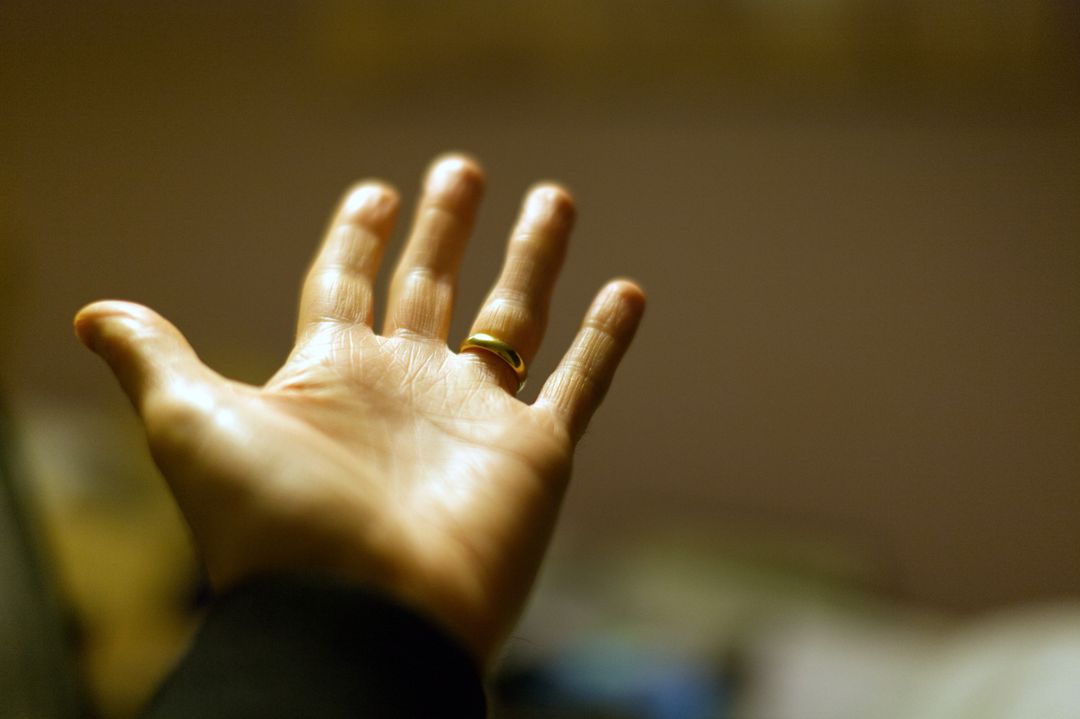
The left ring finger, the fourth finger from your thumb on your left hand, is the standard in the United States, Canada, the UK, Australia, and most of the Anglo-speaking world. It's what your officiant will assume, what your in-laws will probably expect, and what your photographer will frame for during the ceremony.
The exception list is short but worth knowing if your partner, or your future in-laws, come from somewhere with a different tradition. In Germany, Russia, Greece, and parts of Eastern Europe and South Asia, men wear the wedding band on the right ring finger. Some couples wear an engagement ring on the left and switch to the right at the ceremony itself.
And then there are American guys who pick the hand that suits their work, their dominant side, or what their parents wore. None of those choices is wrong, since the convention is custom, not law.
Why Do Men Wear a Wedding Ring on the Left Hand?
The American left-hand convention isn't ancient and it isn't religious. It's Roman, and the Romans believed a single vein, the vena amoris or "vein of love," ran from the fourth finger of the left hand directly to the heart. Wearing a ring on that finger physically tied your beloved to the most important organ in the body.
Anatomically, this is wrong, because every finger has its own venous network and none has a private express lane to the heart. But the symbolism stuck regardless. Roman customs spread through Western Europe and to the British Empire, and the British Empire carried the convention to North America, Australia, and most of the English-speaking world. So if you're a guy in the US asking which hand a wedding ring goes on, the answer is "left," because Rome said so two thousand years ago, and nobody pushed back hard enough to change it on this side of the Atlantic.
When the Right Hand Comes Up: Exceptions a US Guy May Encounter
Most American men never need to think about this. But if you're marrying into a family whose roots are German, Russian, Greek, or Indian Hindu, the right-hand convention is going to come up in conversation, at the very least so you can preempt the "your ring is on the wrong hand" comment at the reception. Here are the exceptions worth knowing.
| Tradition | Hand | Why |
|---|---|---|
| United States (default) | Left | Inherited Anglo-Roman tradition |
| UK / Canada / Australia / NZ | Left | Same Anglo-Roman lineage |
| Mexico & most of Latin America | Left | Catholic + Spanish colonial Anglo-aligned custom |
| France & Italy | Left | Roman vena amoris origin |
| Germany | Right | Engagement on left, switched to right at the ceremony |
| Russia | Right | Eastern Orthodox tradition, right is the "honorable" hand |
| Greece | Right | Greek Orthodox custom, relevant for Greek-American weddings |
| India (Hindu) | Right (men) | Left hand traditionally considered ritually impure |
| Eastern Europe (Poland, Ukraine, Bulgaria) | Right | Mix of Catholic and Orthodox influence |
If your fiancée or her family come from any of these traditions, ask before the ceremony. It's a thirty-second conversation that prevents an awkward moment in front of two hundred people.
Do Religious Traditions Change Which Hand?
Faith overrides geography, and a Greek Orthodox American wedding will use the right hand even though it's happening in Chicago. Here's how the major traditions a US man might encounter handle wedding ring placement.
Eastern Orthodox Christianity (Greek, Russian, Serbian, Bulgarian, Romanian) uses the right hand, ring finger. The right hand is treated as the more honorable hand in scripture and liturgy. It's the hand of blessing and the hand raised in oaths. Eastern Orthodox men born in the United States typically follow this convention if they're observant.
Roman Catholicism has no fixed rule from the Vatican. American Catholics follow the regional default, left hand in the US, the same as their non-Catholic neighbors. Catholics with Eastern European roots (Polish, Ukrainian, Croatian) sometimes default to the right hand because of family custom.
In Judaism, the groom in a traditional ceremony places the ring on the bride's right index finger, not the ring finger. After the ceremony, most modern Jewish women move it to the left ring finger to match the broader American convention. Traditional Jewish weddings don't include a groom's ring at all, though many modern American Jewish couples have added one and follow whatever local custom applies.
Under Hinduism, Indian-American Hindu men typically wear a wedding ring (or no ring at all, many Hindu marriage traditions don't use a band) on the right hand. The left hand is traditionally considered ritually impure for eating and important gestures, so important objects sit on the right.
Islam varies by region and school. Some traditions discourage gold rings for men entirely, and silver is often preferred. Hand placement follows local custom. The right hand is common in Arab traditions, left in some South Asian Muslim communities. American Muslim couples often default to the regional US convention regardless of family origin.
Why Do Some American Men Switch Hands?
Tradition gets you started, but a wedding ring lives on your hand for forty-plus years. Plenty of American guys end up moving theirs to a hand the etiquette books didn't recommend. Here's what drives the switch.
You work with your hands and the dominant side takes a beating. If you're a right-handed mechanic, electrician, carpenter, or surgeon, your right hand grips, twists, and impacts more than your left. A ring on the dominant hand wears faster and gets caught more often. Many tradesmen wear theirs on the non-dominant left for protection, and many left-handed tradesmen flip it to the right for the same reason. (For ring construction that holds up to that kind of wear, see our breakdown of tungsten rings: pros and cons.)
Your dominant hand is a different size. The hand you use more is usually slightly larger, sometimes a full half size. A ring sized for one hand won't fit comfortably on the other. If you're sizing for the future, get measured on the hand the ring will live on, not whichever one is more convenient at the jeweler. Our guide to measuring men's ring size at home walks through doing this right.
You're left-handed and writing with a ring is annoying. A wide band on your dominant ring finger drags across paper, presses into pens, and clinks against laptops. Most American lefties move their ring to the right hand within a year of the wedding, regardless of where the ceremony placed it.
You play an instrument or a sport. Pianists, guitarists, climbers, and golfers all have specific reasons to keep their dominant hand free of jewelry. The ring goes on whichever hand interferes less with the activity that matters more.
Your spouse's tradition differs from yours. A German-American man marrying a fourth-generation American woman will often default to the right hand because that's what his family expects. She'll wear hers on the left because that's what hers expects, and both are correct.
Engagement Ring vs Wedding Ring: Which Goes Where for Men?
For most men in the US, the wedding ring is the only ring. Male engagement rings are still the exception, though they're growing. If you do wear both, the order matters.
The convention for women is to wear the wedding band closer to the heart (so, beneath the engagement ring on the same finger). The logic: the wedding ring is the one given at the ceremony itself, so it sits closest to your skin. Some men who wear both follow the same order. Others stack them differently or wear them on different hands entirely.
If you're keeping things simple (one ring, no engagement band, the way most American grooms still do), pick a wedding ring that fits your day-to-day life. A clean classic profile works in any setting. Ingot is the cleanest silver matte option in our catalog. Monolith is the matte black bestseller and comes in 6mm or 8mm depending on your hand. For something with a quiet accent, Helm pairs a black matte exterior with a rose gold interior, only you see it, but it's there. All three are nickel-bonded tungsten carbide built to take a couple of decades of wear without thinning.
Whichever style you pick, what matters more than the hand is the fit. Ring widths affect comfort more than most guys expect, so see our 6mm vs 8mm guide if you're not sure where to land. And if you're worried the ring won't sit right once it's on, our complete guide to how a ring should fit covers what "snug but not tight" actually feels like.
Common Questions About Which Hand to Wear a Wedding Ring On
Can a man wear his wedding ring on his right hand in the US?
Yes. There's no rule, no etiquette violation, and no legal issue. The left-hand convention is just that, a convention and nothing more. American men switch to the right for practical reasons (dominant hand, comfort, work) or because of family/religious tradition all the time. If anyone comments, it's a small talk question, not a faux pas.
What finger is the wedding ring finger for men?
It's the fourth finger from the thumb, the one between the middle and pinky, on whichever hand you've chosen. This is true everywhere the ring is worn, regardless of left or right. Calling it "the ring finger" is universal. The only variable is which hand it's on.
Why do Germans wear their wedding ring on the right hand?
It's a Germanic tradition that predates the country itself. Engagement rings in Germany are typically worn on the left. At the wedding ceremony, both partners move their rings to the right hand to mark the change in status. Austria and parts of Switzerland follow the same convention, and many German-American families carry it over.
Should I take my wedding ring off at the gym?
If you lift heavy or use grip equipment, yes, bar friction and ring metal don't mix, and a ring caught on a piece of equipment causes serious injuries. Most coaches recommend a dedicated silicone ring for the gym and the original wedding band for everywhere else. If you're working with a tungsten ring specifically, there's also no good way to resize it, see our resize guide for the workaround.
Is it bad luck to wear a wedding ring on a different finger?
No. The "bad luck" idea is folklore, not anything supported by tradition. Men wear wedding rings on the middle finger (rare, usually a fit issue), the index finger (rarer), or the thumb (almost never) without consequence. The fourth finger is where it sits because of the Roman vena amoris story, not because the other fingers are unlucky.
The hand the ring sits on is mostly etiquette and inheritance. The ring itself is the thing you'll see every day for the rest of your marriage. If you're choosing one now, look at the full FoundryCut men's wedding band collection, every style is nickel-bonded tungsten carbide, built to last, and priced where the market actually makes sense.
Once you've decided which hand, the natural follow-up questions are how the rings stack and when to wear which: see which goes first when stacking the engagement ring and wedding band, whether the wedding band goes on top or bottom, and the full breakdown of engagement ring vs wedding ring for men.


